Cookies & similar technologies
Cookie Policy
This Cookie Policy explains how Proplix uses cookies and similar technologies on the public website.
It should be read together with our Privacy Policy. Where non-essential cookies or similar technologies are used, they should only be activated in line with applicable consent requirements.
What cookies are
Cookies are small text files placed on your device when you visit a website. Similar technologies can include pixels, local storage, tags, SDKs or other tools that store information on, or access information from, a user’s device.
How we use them
Essential storage supports website security, contact verification and your privacy choice. Optional live chat and visitor insights connect to the Britixo service platform only after you allow them. You can browse, search the Help Centre and use the contact form with essential cookies only.
Your choice is stored under proplix_privacy_choice_v1 for up to 180 days. If persistent storage is unavailable, the controller uses session storage or keeps the choice for the current page. We ask again when the saved choice expires or the consent notice changes.
Types of cookies we may use
- Strictly necessary cookies – used for core website operation, security, load balancing, consent handling or other functions needed for a service you have requested.
- Preference or functionality cookies – used to remember choices such as interface preferences or repeated actions.
- Analytics or performance cookies – used to understand website traffic, page usage and service improvement.
- Live chat and visitor insights – optional tools for conversations, website visits and page interactions, provided through the Britixo platform.
The optional visitor tool is held inactive until you allow it. Its browser storage can include visitor and session identifiers such as vi_visitor_key, vi_session_key, vi_visitor_id_v143 and vi_session_id_v143. Turning it off clears these identifiers from local and session storage and reloads the page if the tool was already running.
Consent and exemptions
Where the law requires consent, we rely on your choice before setting or reading non-essential cookies. Some technologies may be used without consent where a legal exemption applies, for example where they are strictly necessary to provide a service you have requested or are required for essential communications or security functions.
Third-party technologies
Our optional Visitor Intelligence and live engagement tools are served from britixo.co.uk, the connected Britixo service platform. They use the site identifier and relevant website activity to support chat and visitor insights. Links to WhatsApp and other external services open those providers, whose own privacy terms apply.
How to manage cookies
Use or the footer cookie-preferences button at any time. Choosing essential cookies stops optional tools; if they have loaded, the page reloads to stop them. This does not prevent you from contacting Proplix. Browser controls can also delete or block storage.
- You can delete existing cookies from your browser.
- You can block future cookies through browser preferences.
- You can revisit consent preferences if the website provides a cookie settings or banner tool.
Browser signals and sensitive pages
When your browser sends Global Privacy Control or Do Not Track, broader visitor tracking stays off. You may explicitly allow live chat on its own. Contact pages and URLs containing query parameters also use the restricted chat-only mode to keep form and URL details out of broader visitor analytics. Private account routes are not tracked by the public website collector.
Changes to this policy
We may update this Cookie Policy from time to time to reflect legal requirements, website changes or technology updates. The latest version published on this page will apply from the date shown below.
Contact
If you have questions about cookies or similar technologies used on this website, please contact us using the details on our Contact page.
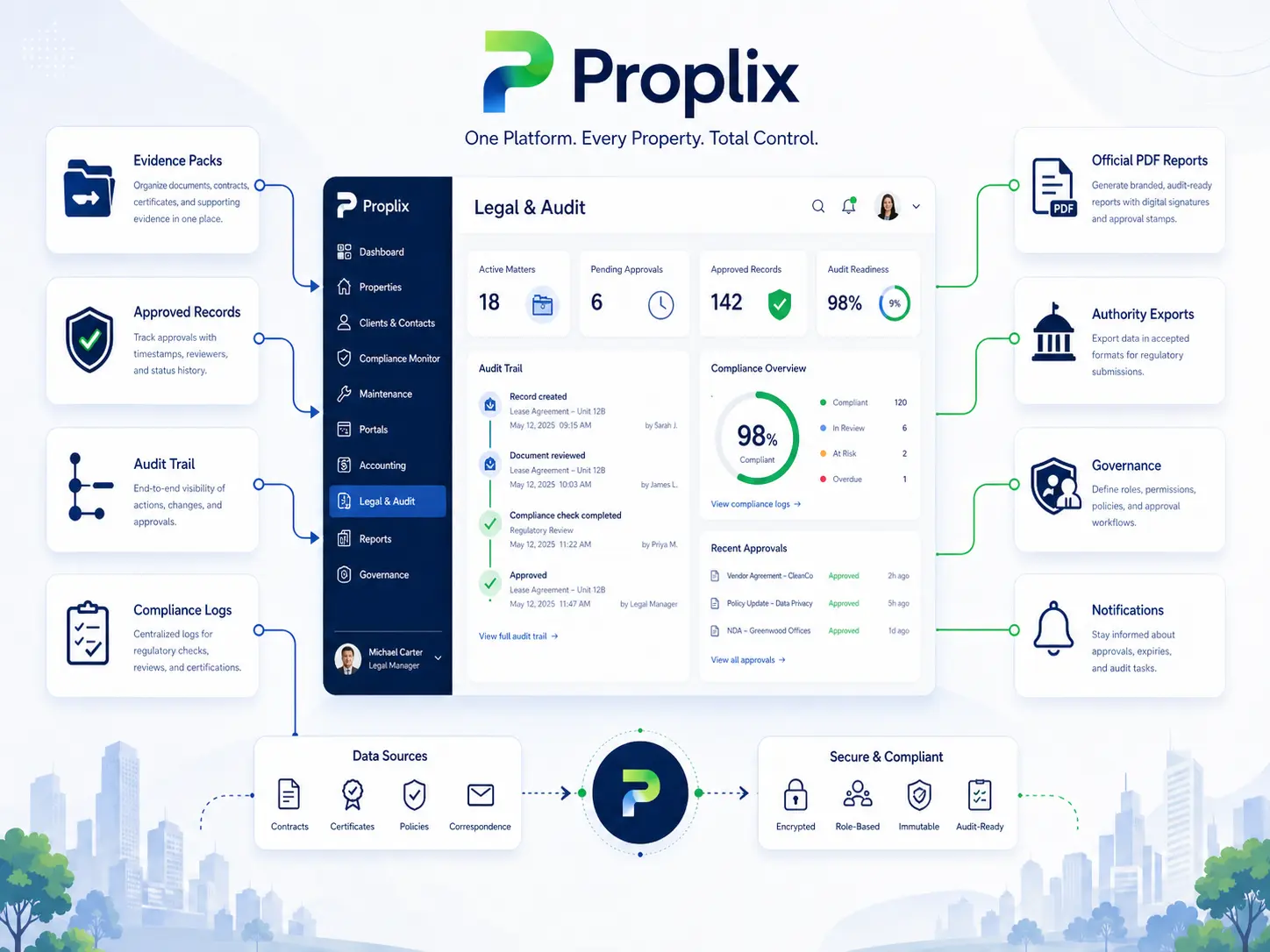
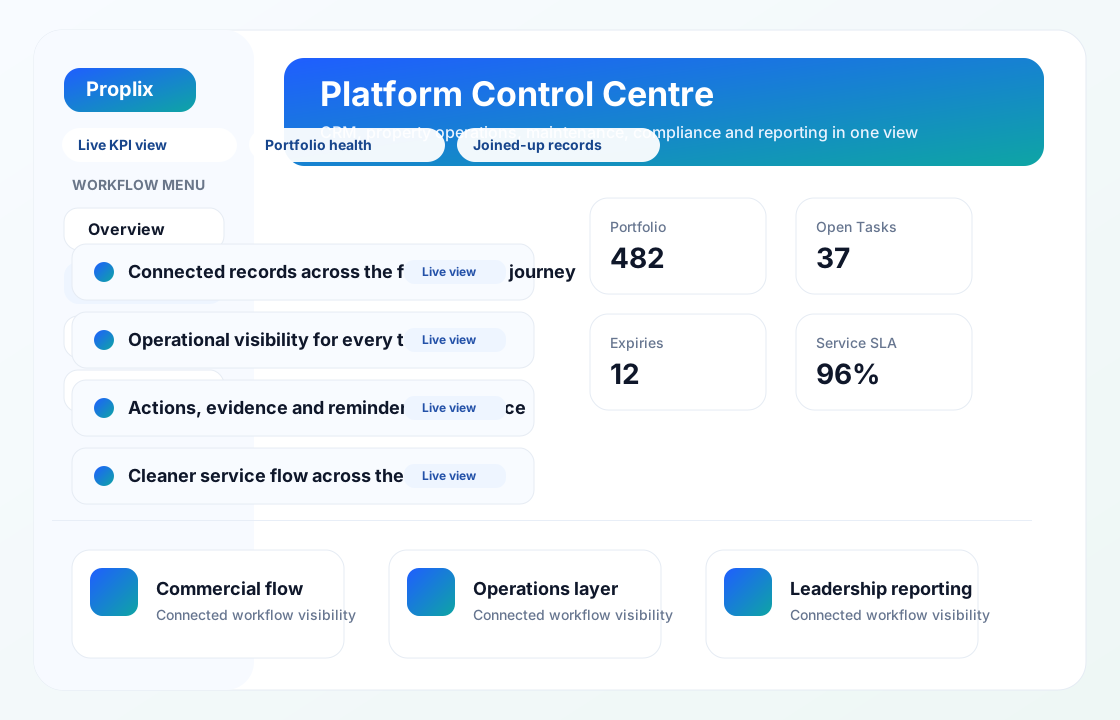
Platform illustration
A visual view of platform trust and transparency
This illustration supports the trust layer of the website by showing that transparency and structured digital operations belong alongside the wider Proplix product experience. It adds a cleaner visual context without changing the policy content itself.