
For councils and social housing providers
Social housing software for teams that need residents, repairs, complaints, compliance and governance to work together
Social housing work is never just one department’s job. Housing officers, repairs teams, resident service teams, complaints teams, compliance managers, contractors and senior leaders all touch the same homes, the same residents and the same service outcomes. When those teams work in separate systems, the organisation usually ends up carrying the cost in delays, duplicated contact, weak visibility and fragmented accountability.
Proplix is designed around a more connected operating model. Instead of treating CRM, repairs, resident communication, compliance, documents and reporting as separate layers, the platform should bring them into one structured environment. That matters for local authorities, ALMOs, housing associations and social housing service providers that need better operational control, cleaner case handling and a stronger resident experience.
Built for current UK social housing reality: this page is positioned around the practical service environment now facing providers, especially the stronger focus on safe homes, transparent service delivery, statutory complaint handling, resident-facing performance reporting and clearer damp, mould and hazard response expectations.
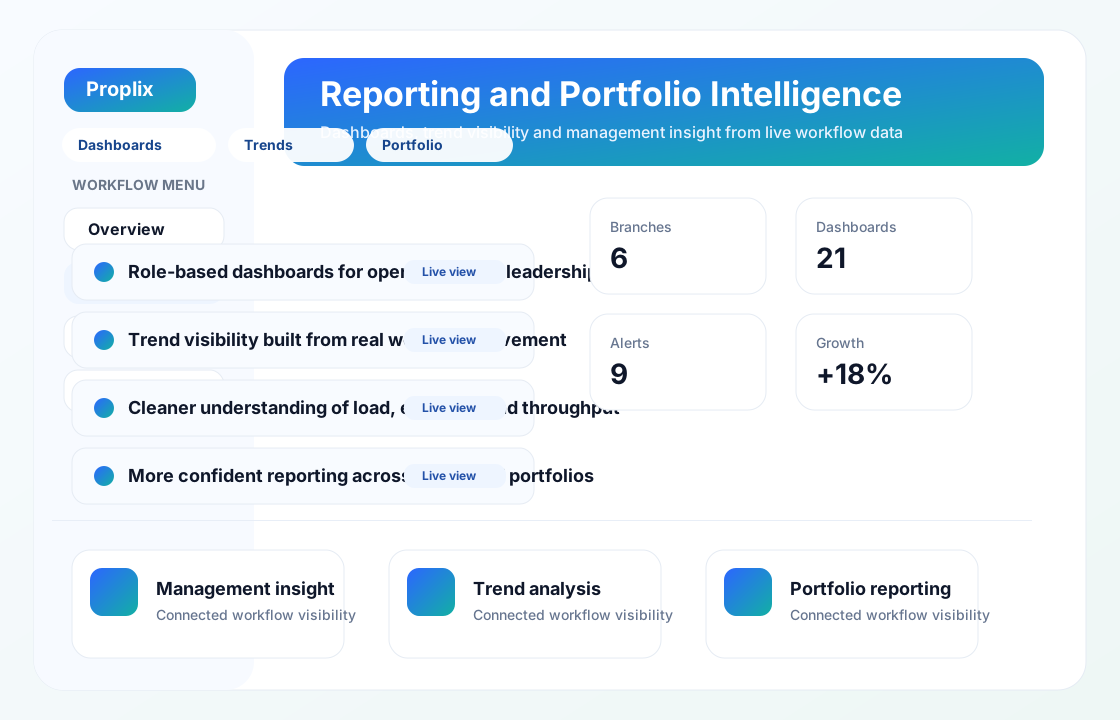
Explore the social housing workflow in two ways
Each area below now gives you two routes. You can jump into an existing relevant Proplix page to understand the wider platform capability, or open a dedicated social housing explainer page that translates the application into a council or provider operating context. That gives buyers, managers and internal stakeholders a cleaner journey through the website.
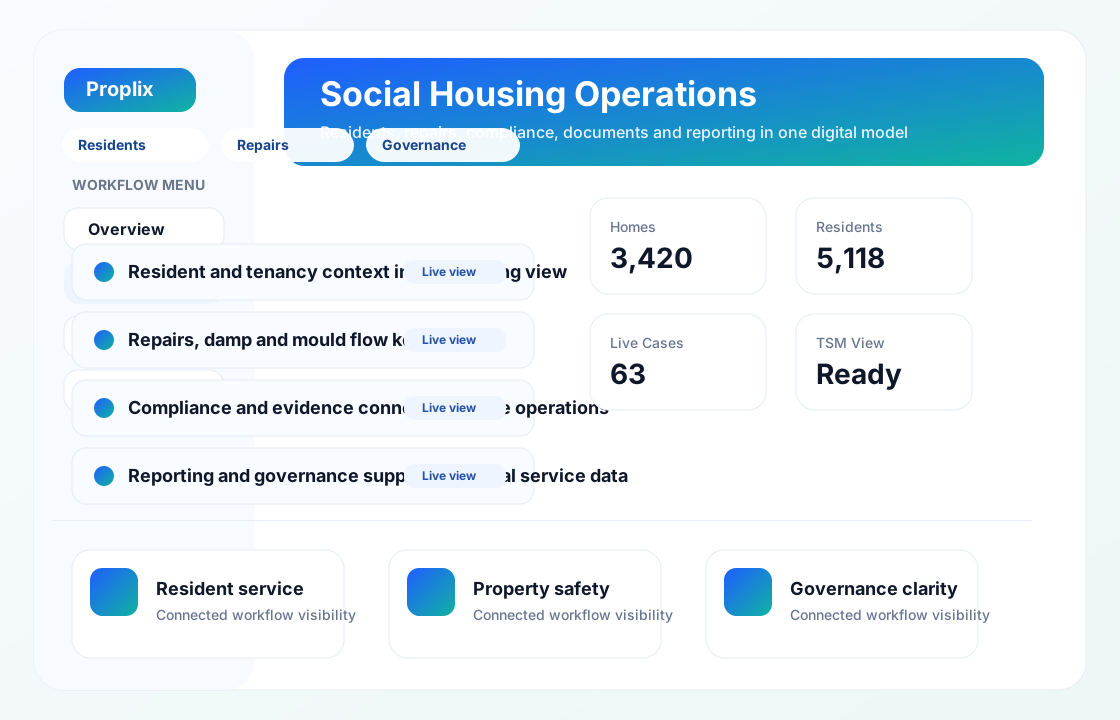
Resident & Tenancy Management
Bring resident identity, tenancy records, household context, vulnerability notes, communication history and linked documents into one operating view.
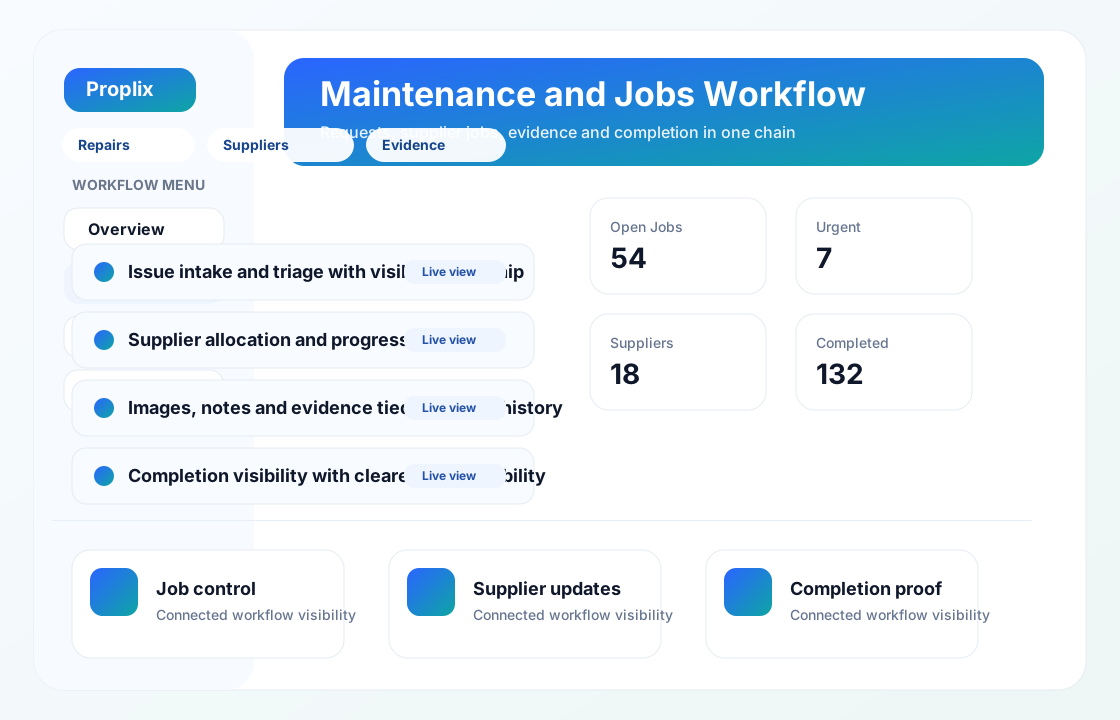
Repairs, Damp & Mould
Coordinate responsive repairs, inspections, damp and mould cases, contractor updates, evidence capture and resident communication in one controlled workflow.
Asset, Stock & Planned Works
Connect homes, components, condition information, planned programmes, estate context and operational delivery into one usable stock view.
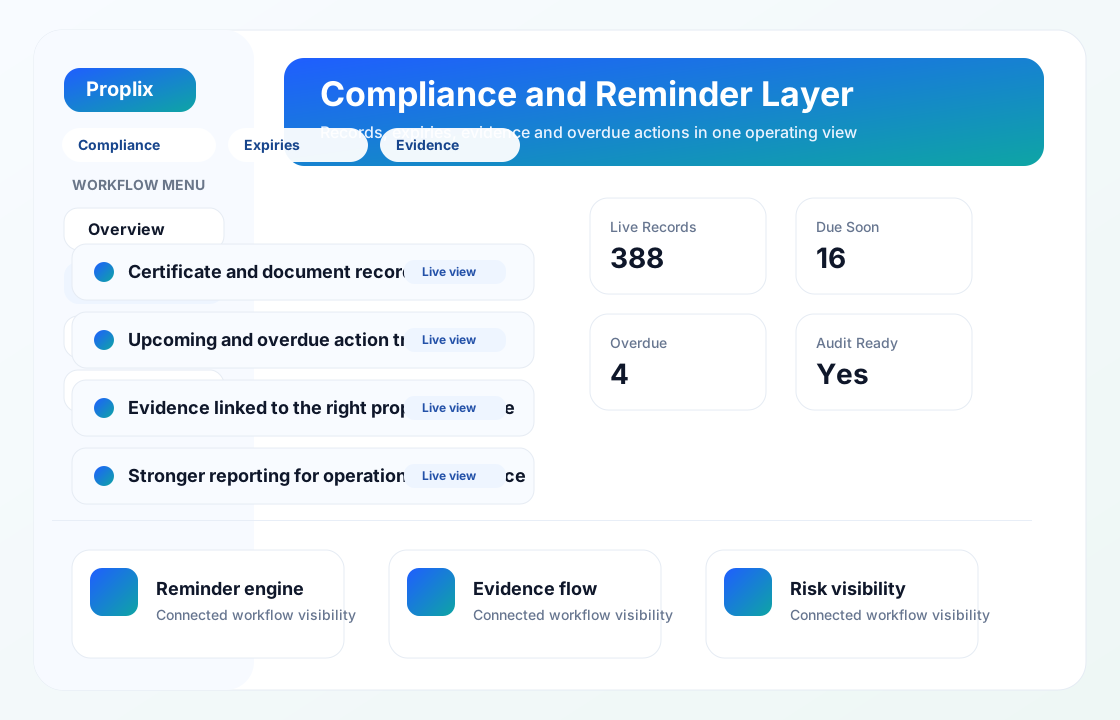
Compliance & Building Safety
Track recurring obligations, inspections, certificates, evidence, notices, deadlines and service accountability in one compliance layer.
Complaints & Resident Engagement
Handle complaints, service recovery, resident feedback and learning actions in a structured workflow that connects to the wider resident and property record.
Income, Arrears & Finance
Bring rent accounts, arrears workflows, communication history and tenancy context together so income teams and housing teams can act from the same picture.
Allocations, Lettings & Voids
Control vacancies, applications, offers, sign-up stages, void turnaround and move-in readiness through a clearer, auditable workflow.
Reporting, Governance & TSMs
Turn service activity into leadership dashboards, evidence-led reports, audit trails and TSM-style performance visibility from one shared data picture.
Portals, Documents & Communications
Use controlled documents, resident-facing visibility, service updates and portal workflows to reduce friction and strengthen trust.
Why social housing software has to be more operational than generic property software
For councils and regulated providers, the challenge is not only storing information. The challenge is proving that the right team saw the right issue at the right time, that a resident was kept informed, that repairs moved properly, that safety and quality concerns were escalated, that complaints were handled with learning, and that leaders can see what is happening across the stock, the service and the resident journey. That is why social housing software has to be built around workflow discipline, service accountability and evidence.
01
Repairs and hazards cannot sit in a silo
Teams need a live view of responsive repairs, damp and mould, emergency hazards, inspection outcomes, follow-on works and contractor activity. If this is split across email, spreadsheets and separate work-order tools, the organisation loses pace and audit clarity.
02
Residents need one joined-up service story
Residents do not separate a complaint from a repair, or a repair from a communication failure. Software should therefore connect resident contact history, vulnerability context, tenancy information, case notes, documents and service actions in one place.
03
Compliance has to be visible, not hidden
Landlords and councils need a reliable way to manage property compliance, safety evidence, deadlines, exceptions and outputs. That means records, certificates, inspections, reminders, notices and escalations should be live operational data rather than disconnected files.
04
Leadership needs service intelligence, not partial reports
Senior teams need dashboards that connect stock condition, service demand, complaints, arrears, works activity, contractor performance, resident feedback and risk indicators. Better leadership decisions come from one source of operational truth.
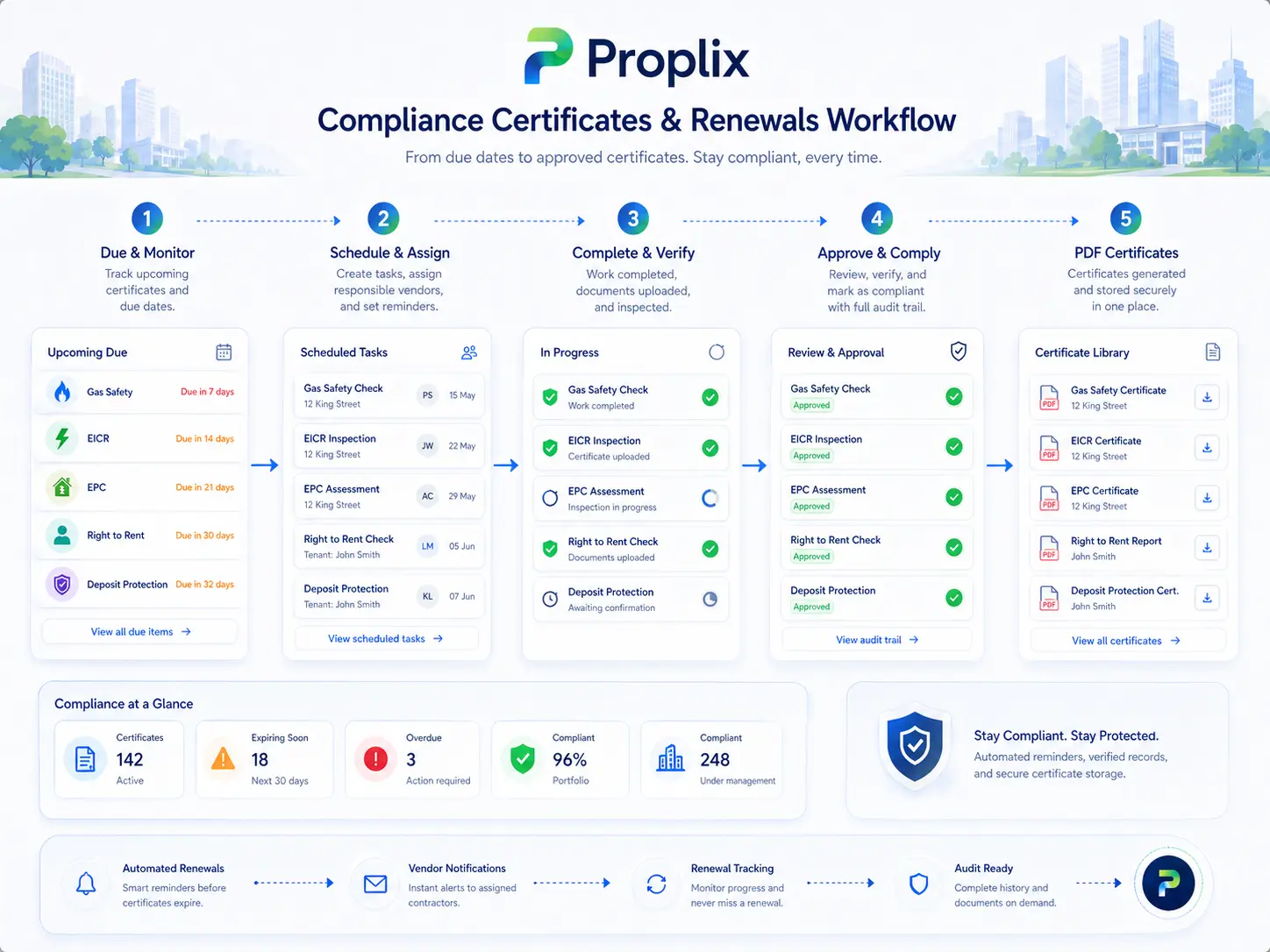
What a serious social housing platform should actually cover
The strongest systems for this sector do not stop at tenancy records or basic repairs. They need to support the day-to-day operating reality of social housing: resident communication, property safety, service requests, inspections, contractor delivery, governance reporting, complaints, neighbourhood issues, lettings activity, document handling and clear accountability across teams.
That is especially important for organisations working under pressure from service demand, stock quality expectations, resident scrutiny and board-level reporting. A modern platform should help teams move from reactive administration into controlled, visible delivery, with the Help Centre supporting teams as they work.
- Shared resident and property records with full service history.
- Repairs, damp and mould, inspections and contractor workflow management.
- Property compliance, safety evidence and deadline tracking.
- Complaints, resident engagement, TSM-style reporting and service-improvement visibility.
- Allocations, lettings, voids, tenancy changes and move-in workflow support.
- Documents, audit trail, approvals, communications and leadership reporting.
Core social housing workflows and functionality
Below, every major workflow is now clickable in two directions: one into the existing Proplix site structure, and one into a dedicated social housing explainer. That creates a stronger solution architecture for SEO, internal linking and buyer education.
A
Resident & Tenancy Management
Resident service quality often rises or falls on one simple question: can the member of staff looking at the case actually see the full picture? In social housing, that picture is rarely only a name and an address. It can include household composition, communication preference, vulnerability information, previous contacts, tenancy events, support needs, complaints history, open repairs and linked compliance concerns. When those details are split across different systems, teams spend time re-asking questions that the organisation already knows the answer to.
B
Repairs, Damp & Mould
Repairs are one of the clearest tests of whether housing operations really work. Residents judge the service through repair response, communication, reliability and whether the issue is actually solved. Internally, organisations judge themselves through triage quality, priority handling, contractor control, follow-on works, backlog management and the confidence that nothing urgent has gone missing.
C
Asset, Stock & Planned Works
A social housing organisation cannot manage what it cannot see. Stock data should not live only in technical schedules while service and resident teams work somewhere else. Better outcomes happen when property records, component knowledge, inspection evidence, planned works and recurring issues are connected to the live operating environment.
D
Compliance & Building Safety
Property compliance in social housing is not only about keeping certificates on file. It is about knowing which homes, blocks or schemes have active obligations, what evidence exists, what is due next, who owns the next action and how exceptions are escalated. Where that process is fragmented, providers lose confidence and leaders lose visibility.
E
Complaints & Resident Engagement
Residents do not experience complaints as a stand-alone administrative process. Most complaints are connected to a wider service story: a repair that kept slipping, communication that broke down, a promise that was not followed through, a repeated issue that nobody owned properly or a resident who felt unseen by the system. That is why complaint handling software should connect directly to the wider service record.
F
Income, Arrears & Finance
For social housing organisations, income collection is not only a finance process. It sits close to tenancy sustainment, support, vulnerability, communication quality and neighbourhood stability. A case can move quickly from a missed payment into a wider housing management issue if the organisation cannot see the full context.
G
Allocations, Lettings & Voids
Allocations and lettings are high-pressure workflows because they sit at the point where resident need, stock availability, policy, deadlines and operational handover all meet. If those stages are managed through partial spreadsheets and email threads, avoidable delays and audit weaknesses appear very quickly.
H
Reporting, Governance & TSMs
Leadership teams do not need more disconnected reports. They need a system that turns live operational activity into usable intelligence. In social housing that means seeing complaints, repairs, risk, resident satisfaction, compliance, stock issues, arrears, contractor delivery and service backlog in ways that help leaders ask better questions and act earlier.
I
Portals, Documents & Communications
Communication is one of the biggest drivers of resident confidence. Residents do not only want a job raised or a complaint logged. They want to know what is happening, what is expected next, what records exist and whether the organisation is truly in control. That is why portals, documents and communication tools matter so much in social housing operations.
Why this matters to different teams across the organisation
One of the biggest advantages of a connected platform is that different teams can work from one operating picture without forcing every function into the same screen or the same workflow. The platform should be broad enough for the organisation, but practical enough for the user in front of it.
Housing officers and resident service teams
Need fast access to resident history, tenancy details, active repairs, complaint stages, notes, letters and follow-up actions.
Repairs and asset teams
Need inspection control, contractor visibility, stock context, recurring property issues, evidence files and completion assurance.
Compliance and safety leads
Need recurring obligations, evidence packs, exceptions, overdue actions, document history and leadership reporting.
Heads of service and executive teams
Need dashboards that connect service demand, resident outcomes, risk, performance, repair pressure, complaint learning and programme priorities.
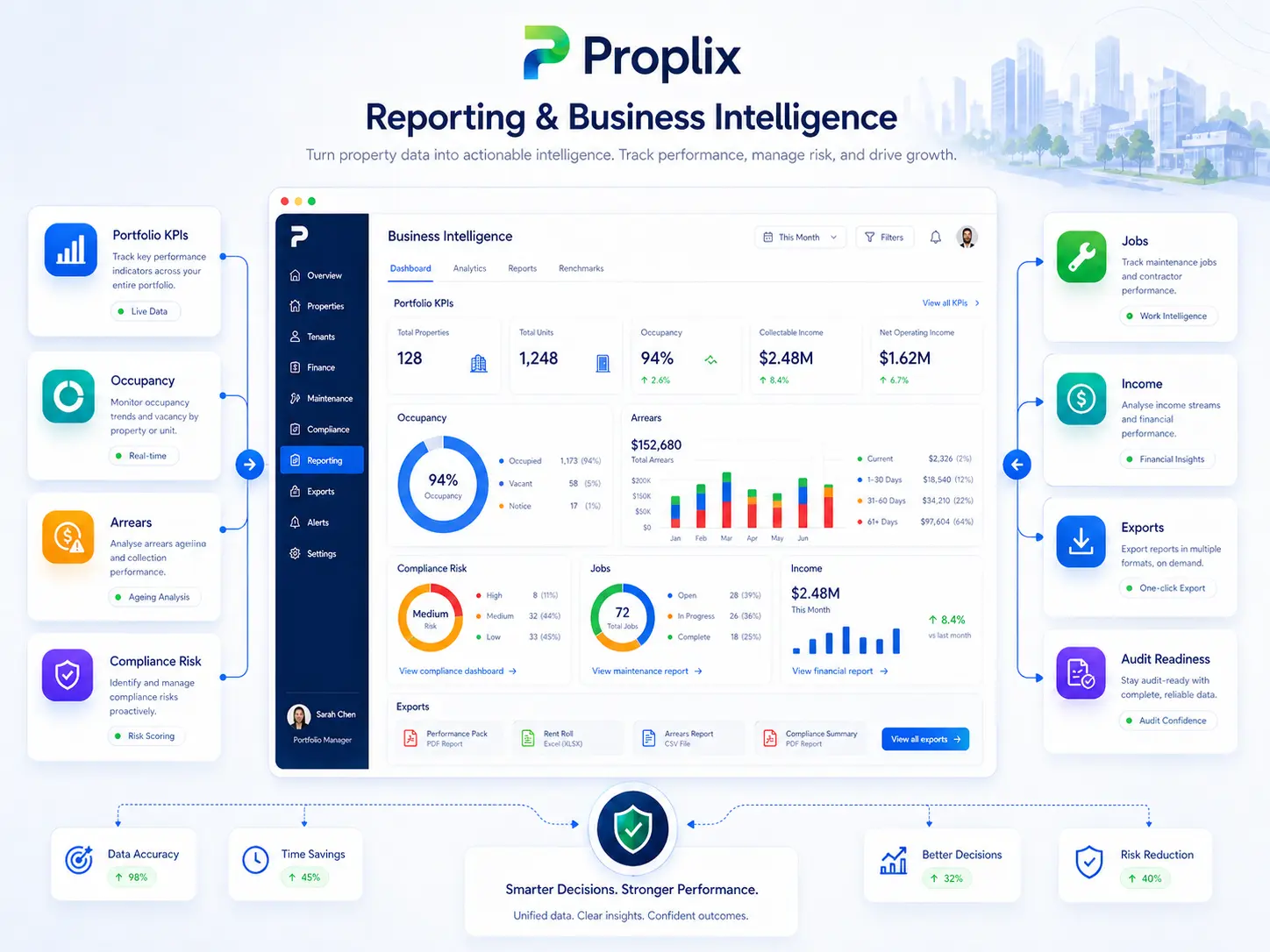
Why Proplix is a strong fit for councils and social housing service providers
Proplix is not positioned as a narrow repairs tool or a basic contact database. The value is in the way the platform can bring service operations, resident visibility, compliance handling, maintenance workflow, documents, portals and accountability closer together. For social housing organisations, that creates a more realistic foundation for joined-up service delivery.
That approach is particularly useful where councils and providers want to reduce fragmented working across housing management, resident service, maintenance, contractor coordination, compliance and leadership reporting. A platform should not ask your teams to remember what happened somewhere else. It should help them see the service story in one place and act with more control.
It is also important that the website story matches operational reality. Social housing buyers do not want generic software claims. They want to know that the software can support repairs pressure, resident visibility, complaint handling, damp and mould workflow, stock and safety evidence, contractor activity, reporting and service improvement. That is why this page is written around what teams actually need to manage.
How councils and social housing providers can make the service model far more digital with Proplix
For many councils and social housing providers, the real challenge is not whether data exists. The challenge is whether teams can actually see the right information quickly enough to act with confidence. Proplix brings residents, properties, service history, compliance records, reminders, documents, communications and operational activity into one usable environment. The result is a more digital service model that is easier to manage, easier to evidence and easier to improve.
The dropdowns below are designed to show social housing decision-makers what a more joined-up digital operating model can look like in practice. This is the part of the page that should make a council, ALMO or provider think: this is the kind of visibility and control we actually need.
One digital property and resident view instead of fragmented records
With Proplix, the organisation should be able to move away from a fragmented working model where resident details sit in one place, repair notes sit somewhere else, compliance files are held separately, and complaint information lives in another workflow. A stronger platform should bring the property, the resident, the tenancy context, the communication history and the service actions together.
That means staff should be able to open one record and see the operational picture more clearly: who the resident is, what has happened at the property, what work is open, which documents exist, whether compliance items are coming due and whether there are related complaints, risks or service concerns attached to that home or household.
Automatic visibility of live compliance position and expiry-driven intimations
Social housing teams should not need to manually chase every recurring compliance event from memory or spreadsheets. Proplix gives teams a live view of compliance status across homes, blocks or schemes, while also surfacing what is due, what is approaching expiry, what is overdue and what needs escalation.
That includes automated reminders and intimation-style alerts for expiring records, follow-up actions, pending inspections, missing evidence or unresolved workflow stages. In practice, this gives housing, compliance and management teams a more active control layer instead of a passive document archive.
Resident details, contact history and service context available instantly
Councils and providers need more than a name and address. They need to understand the service context around the resident: contact history, household detail, vulnerability-related context where appropriate, previous service issues, linked complaints, active works and the wider relationship with the landlord. A stronger digital model means that information should be easier to access without repeated internal chasing.
When the right operational context is visible from the start, staff are better placed to communicate properly, avoid duplication, reduce handover failures and respond in a more informed and resident-focused way.
Repairs, damp and mould workflow managed with clearer accountability
Repairs pressure is one of the biggest reasons social housing teams want stronger systems. Proplix provides one place where responsive repairs, damp and mould cases, follow-on works, inspections, updates, contractor activity, evidence and resident communication can all sit in one operational chain.
Instead of different teams working from different fragments, the organisation should be able to see what was reported, who owns it, what stage it is in, what evidence has been added, whether time-sensitive action is required and whether the resident has been kept informed. That creates a more digital service model and a more defensible operational record.
Complaints, service failures and learning actions connected to the real case history
Complaint handling becomes stronger when it is connected to the real service history behind the complaint. Proplix therefore allows teams to see the complaint in the context of the property, the resident, the repair, the communication failures or the missed actions that created the issue. That is much more useful than a stand-alone complaint log.
The organisation should also be able to track stage ownership, deadlines, responses, remedies and learning actions, so the platform supports not only complaint handling but service improvement and leadership visibility as well.
Digital document management with audit trail and evidence control
One of the most practical benefits of a more digital social housing platform is that documents stop becoming detached from the live case. Compliance files, tenancy records, inspection notes, photographs, letters, resident acknowledgements and supporting evidence should all sit in a structured way around the relevant property, resident or workflow.
That gives the organisation a better audit trail and makes it easier to answer internal review questions, leadership queries, complaint investigations and service assurance requests with confidence.
AI-assisted operational visibility for busy frontline and management teams
AI should not be presented as a gimmick. In a social housing context, the value is in helping teams see and act on the right operational information faster. Proplix can be positioned around AI-assisted visibility, where the platform helps surface key case signals, upcoming expiries, service risk points, communication gaps, history summaries and action prompts in a clearer way.
That kind of AI-assisted layer can help staff avoid missing important detail in long case histories, and it can help managers focus on priorities that need intervention rather than only reviewing static reports after the event.
Leadership dashboards that show what is happening now, not only what happened last month
Senior teams, heads of service and programme leads often struggle because reporting arrives too late or in a form that does not connect to live operations. Proplix gives councils and providers one operating view across complaints, repairs, compliance, resident issues, properties, service demand, contractor activity and operational bottlenecks.
This is where a more digital platform becomes strategically valuable. It is not only about processing cases more neatly. It is about turning day-to-day work into live management visibility and clearer executive oversight.
Contractors, internal teams and resident-facing workflow connected in one place
Many service delays happen because internal teams, contractors and resident communication are not joined up. A better platform should connect these parts of the workflow so that job updates, notes, status changes, evidence uploads and completion signals are visible without relying on ad-hoc email chains and repeated manual updates.
That makes contractor oversight cleaner, but it also improves the resident experience because the landlord is better able to communicate with confidence about what is happening and what comes next.
Digital portals and controlled communication for a more modern service experience
Social housing organisations increasingly need a cleaner digital interface for residents, suppliers and service teams. Proplix therefore supports a broader digital service experience: documents, updates, communications, reminders, acknowledgements and workflow visibility can all be handled more consistently in one connected environment.
The goal is not to push every interaction online. The goal is to make service delivery more organised, more transparent and easier to follow for both residents and staff.
Better preparation for governance, scrutiny and service challenge
Councils and providers are under pressure to explain what is happening across homes and services, not just to store records. Proplix therefore makes it easier to move from operational cases into evidence-led reporting, audit trail review, service challenge and governance scrutiny. That is one of the clearest reasons decision-makers look for a more joined-up platform.
When the service model is more digital, the organisation is better placed to answer difficult questions with facts, evidence, dates, actions and visible ownership instead of fragmented recollection.
Why this matters for councils right now
Councils and social housing providers are dealing with higher expectations around safe homes, complaint handling, repair timeliness, resident communication, service transparency and leadership oversight. A more digital operating environment helps because it reduces avoidable blind spots between teams and gives the organisation a more dependable service record.
This is the message the page should leave with decision-makers: Proplix can help social housing providers move away from disconnected systems and towards one clearer digital operating model where compliance, resident information, case history, reminders, service action and evidence are much easier to see and manage.
Looking for software that suits a council or social housing provider?
We can show you how Proplix can support residents, repairs, compliance, complaints, documents, portals and leadership reporting in one structured environment. The best next step is a practical conversation around your operating model, your stock profile and the service pressures your teams are dealing with today.
- Show the workflows you need across housing, repairs and compliance.
- Map the platform to council or provider operating reality, not generic theory.
- Review where resident visibility, complaints, contractors and governance need to connect.
- Build a stronger digital foundation for accountable, resident-focused service delivery.
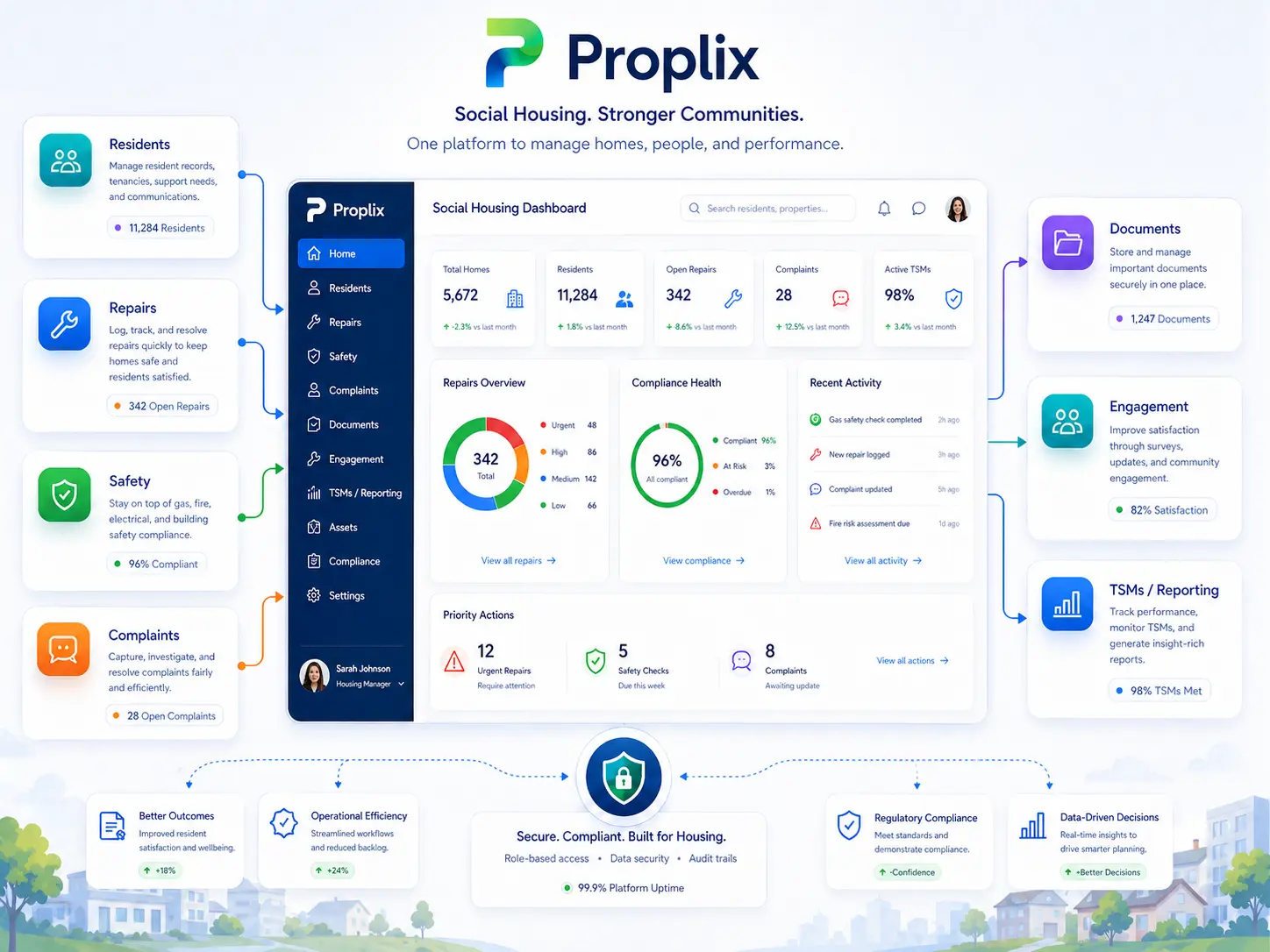
Platform illustration
A visual view of the social housing operating model
This illustration reinforces the social housing message: residents, repairs, compliance, documents, service communication and reporting should work together in one digital environment, making councils and providers better equipped to manage live service delivery.
Designed around the operating model
How Social Housing fits into dependable property operations
Useful software should make the real operating position easier to understand, including where information is incomplete or a decision is still pending. Organisations may use similar property records while running very different services. The right solution reflects who owns each decision, how work moves between teams and what clients, residents, landlords or partners genuinely need to see.
Give each role enough context to act
Front-line teams need fast access to the current position, managers need an honest view of workload and risk, and external users need controlled visibility that reduces unnecessary chasing. Each audience should see the same underlying operation through an appropriate role-aware view. For Social Housing, that means access should follow an evidenced business need and change when responsibility changes.
Keep the reason beside the action
Service quality often weakens at the handover between enquiry, instruction, tenancy, maintenance, finance and compliance. Connecting those stages makes responsibility visible and helps the next person understand what has already happened before taking action. This makes the Social Housing record more useful during absence, escalation, service review or a later audit.
Design for the case that does not fit
Property work includes incomplete forms, late evidence, changed instructions, unavailable suppliers and circumstances requiring discretion. The system should expose those exceptions, preserve notes and direct them to an authorised person instead of silently forcing a misleading “complete” status.
Configure from representative work
A rollout works best when the organisation agrees its operating language, record ownership and exception routes before configuring screens. Pilot work should involve the people who complete the process, not only those who receive the final report. Document what remains outside the system as well, so teams understand the boundary between Proplix, connected services and professional responsibility.
Measure whether the work is improving
Useful measures include response consistency, outstanding actions, repeat data entry, time lost locating evidence and the quality of updates supplied to stakeholders. Those indicators show whether the operating model is becoming easier to manage. Review findings with the people completing Social Housing work, because a dashboard may not reveal the manual workaround being used beside it.
Keep guidance, permissions and records current
Ownership, legislation, services and internal policies change. Schedule periodic checks of access, templates, notifications, integrations and retained information. Record material changes and brief affected users so the configured workflow continues to reflect the organisation’s approved way of working.
Proplix supports structured workflow and evidence handling; it does not provide legal advice or remove the need for competent human review. Discuss your organisation, migration or integration requirements through the central secure enquiry route.
Discuss Social Housing requirements →Plan your next step
Bring a typical case, the systems you use and the main problem you want to solve. Together we can map the records, responsibilities and checks needed for a useful first release.
Explore software integrations, compare enterprise modules or discuss a custom property workflow. The agreed scope will explain what is included, what needs configuration and how your team will be supported.