
Portal journeys
Professional portals designed around the work each person actually needs to complete
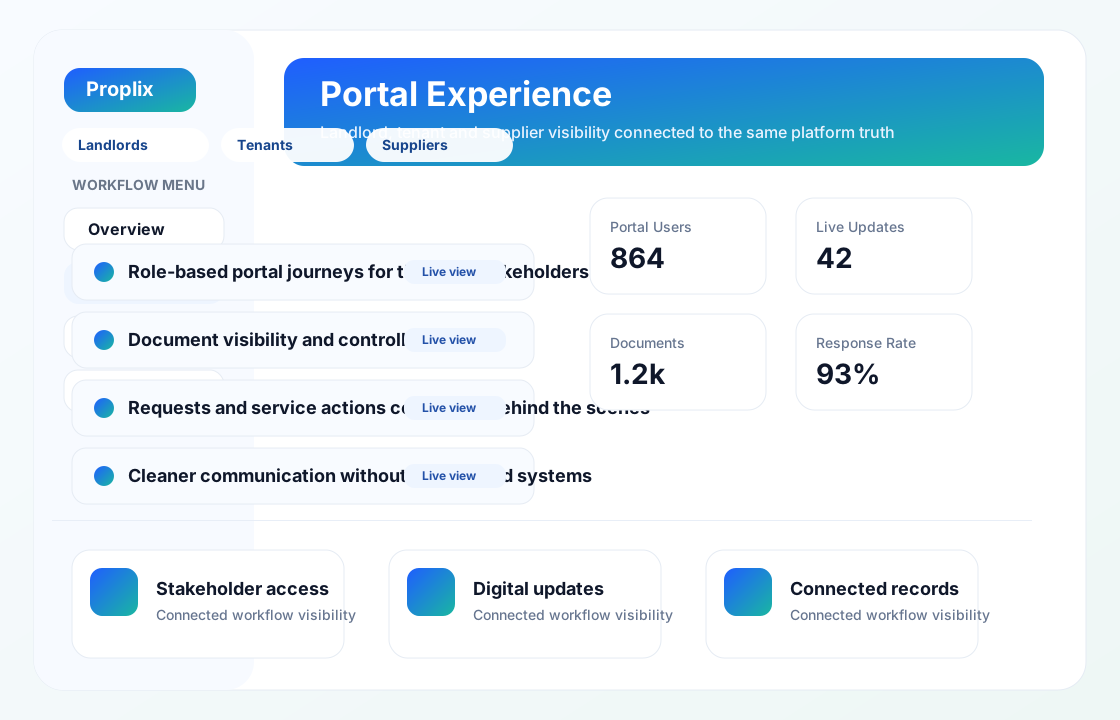
Proplix uses role-based portal journeys to make tenant, landlord and supplier experiences cleaner, more useful and more aligned with the internal platform workflow.
Portal
Tenant Portal
Maintenance, reminders, documents and service visibility in a cleaner tenant-facing experience.
Open page
PortalLandlord Portal
Property snapshots, compliance context, maintenance visibility and approval-oriented transparency.
Open page
PortalSupplier Portal
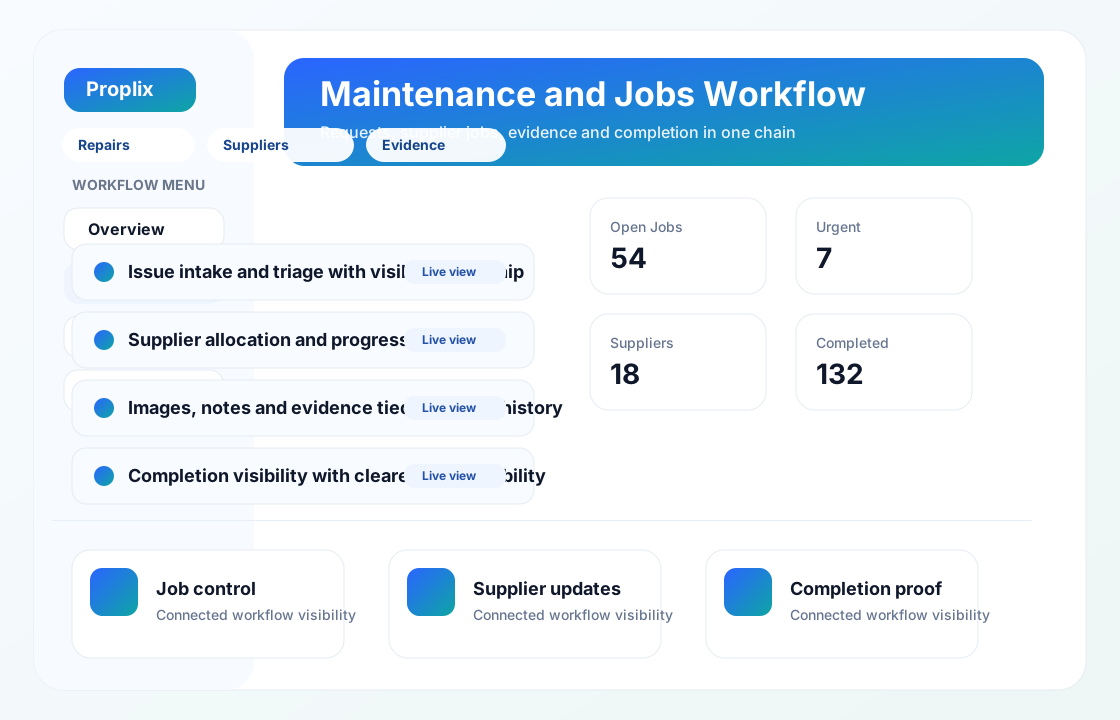
Assigned jobs, notes, photos, updates and completion proof in one cleaner supplier workflow.
Open page
AccountGeneral Client
The standard Proplix client account creation route for customer records that need to live inside the wider platform without being forced into a specialist portal category.
Open page
AccountUser / Staff
The internal Proplix account path for team members who need login access, role-based visibility, ownership and day-to-day operational control inside the platform.
Open page
AccountReal Estate Agent
The dedicated Proplix account route for real estate company or agency-style records that belong inside the property operating model rather than in general client management.
Open page
AccountBusiness Brokers
The specialist Proplix account route for brokerage-related records that need to start in the right operational category from the beginning.
Open page
Portal architecture
Portal features across the Proplix platform
Portal access should do more than expose a few documents. In a stronger property platform, portals become controlled digital workspaces where landlords, tenants and suppliers can see what matters to them, complete relevant actions, reduce unnecessary email traffic and stay connected to the wider service workflow in a paperless way.
The dropdowns below explain the broader portal story for Proplix, including role-based access, document visibility, e-signature-ready workflow support, audit trail value, mobile responsiveness and greener digital operations across the property lifecycle.
Role-based access and controlled portal permissions
Each portal should show only the information and actions relevant to that user type, so the platform remains secure, clearer to use and easier to trust.
- Dedicated landlord, tenant and supplier access paths
- Role-based permissions and visibility rules
- Cleaner separation of private records
- Improved data-control posture
- Reduced accidental exposure of irrelevant information
- More professional user experience
Document sharing, downloads and e-signature workflow support
Portals become far more useful when documents can be viewed, downloaded and moved through controlled approval or e-signature-ready workflow without relying on manual email chains.
- Property and tenancy-related document visibility
- PDF downloads and supporting file access
- E-signature-ready approval flow direction
- Cleaner document acknowledgement pathways
- Improved version visibility and reference value
- Reduced paper dependency across service delivery
Paperless, go-green workflow and reduced admin friction
A strong portal strategy supports digital delivery of notices, documents, updates and workflow actions, helping the business reduce paper handling and manual duplication.
- Paperless document distribution
- Reduced printing, scanning and posting dependence
- Cleaner digital service history
- Greener operating model for modern property businesses
- Improved efficiency across routine interactions
- Stronger sustainability message in service delivery
Notifications, status visibility and communication continuity
Portals should support clearer communication by showing status changes, service progress and the right updates inside the same digital environment.
- Status-led portal visibility
- Cleaner update history for users
- Reduced need for repeated manual chasing
- Better communication continuity over time
- Improved trust through visible workflow progression
- More professional service presentation
Landlord, tenant and supplier portal differences
Each portal should reflect the actual role of the user rather than showing the same interface to everyone. That makes the platform clearer and more commercially useful.
- Landlord view focused on portfolio and management visibility
- Tenant view focused on service, documents and tenancy support
- Supplier view focused on jobs, updates and completion workflow
- Better relevance for each user type
- Reduced confusion across external users
- Stronger product maturity overall
Responsive access across desktop, tablet and mobile
Portal access needs to work well across devices because landlords, tenants and suppliers often interact away from a desk and still expect a clean professional experience.
- Responsive browser-based access
- Mobile-friendly portal workflow
- Tablet-ready viewing and interaction
- Cleaner access for field-based supplier users
- Improved convenience for landlords and tenants
- Better adoption across user groups
Audit trail, timestamps and portal activity history
Portals are stronger when key interactions leave a visible digital trail, helping the business preserve chronology and understand what was shared, viewed or progressed.
- Timestamp-aware activity history
- Digital chronology support
- Better evidence around workflow progression
- Improved internal reference value
- Cleaner dispute and review support
- Stronger long-term service memory
Why portals matter to the wider Proplix platform
Portals are not separate from the platform story. They help connect service delivery, visibility, workflow actions and stakeholder trust to the wider operating environment.
- Extends CRM, maintenance and compliance into external workflow
- Improves stakeholder visibility without losing control
- Supports a more digital and paperless service model
- Reduces fragmentation across communication paths
- Strengthens the one-window platform message
- Creates a more professional external experience
Why portal capability matters
Portals turn the platform into a more complete property service environment
When external users can interact through clean, role-based portal pathways, the business no longer needs to rely so heavily on scattered emails, attachments, manual updates and disconnected approval handling. That improves clarity for the user and reduces friction for the team managing the service internally.
Proplix portals become more valuable when they are understood as part of a wider operational model: one place for visibility, documents, acknowledgements, workflow progression and paperless digital interaction across landlords, tenants and suppliers.
Frequently asked questions
Frequently Asked Questions
Practical answers to common questions from UK letting agents, landlords, property managers and operational teams evaluating this area of Proplix.
What is the purpose of the Portals page?
The portal pages are there to explain how a specific external user group benefits from clearer visibility, better communication and a more controlled service experience through Proplix.
Are portals really important for UK property businesses?
Yes. For many British agencies and managers, portals can reduce unnecessary back-and-forth communication and make the service model feel more professional.
Does a portal replace direct communication?
No. A portal should improve communication quality, not remove human contact. It helps the right information stay visible in the right place.
How do portals help internal teams?
They reduce avoidable admin, make updates easier to follow and help internal teams keep service delivery more organised.
Can portals improve landlord and tenant confidence?
Yes. Better visibility usually leads to better trust because people can see status, updates and relevant information more clearly.
Why does Proplix include a supplier portal as well?
Because maintenance and service delivery become more useful when suppliers are also working within a clearer and more accountable workflow.
Is the portal story separate from the rest of the software?
No. The portal routes are written as part of the wider one-window platform story, so they connect back to workflow, maintenance and operational control.
Will this help agencies look more professional?
Yes. A cleaner portal experience can support a more premium and more modern service model for agencies and property managers.
Why is there a full page for each portal audience?
Because each audience has different needs, and detailed pages make it easier to explain the practical value for landlords, tenants and suppliers separately.
What should I view after this page?
The next step is usually the related solution page, a feature route such as maintenance or property management, or the commercial proposal process if you are ready to discuss implementation.
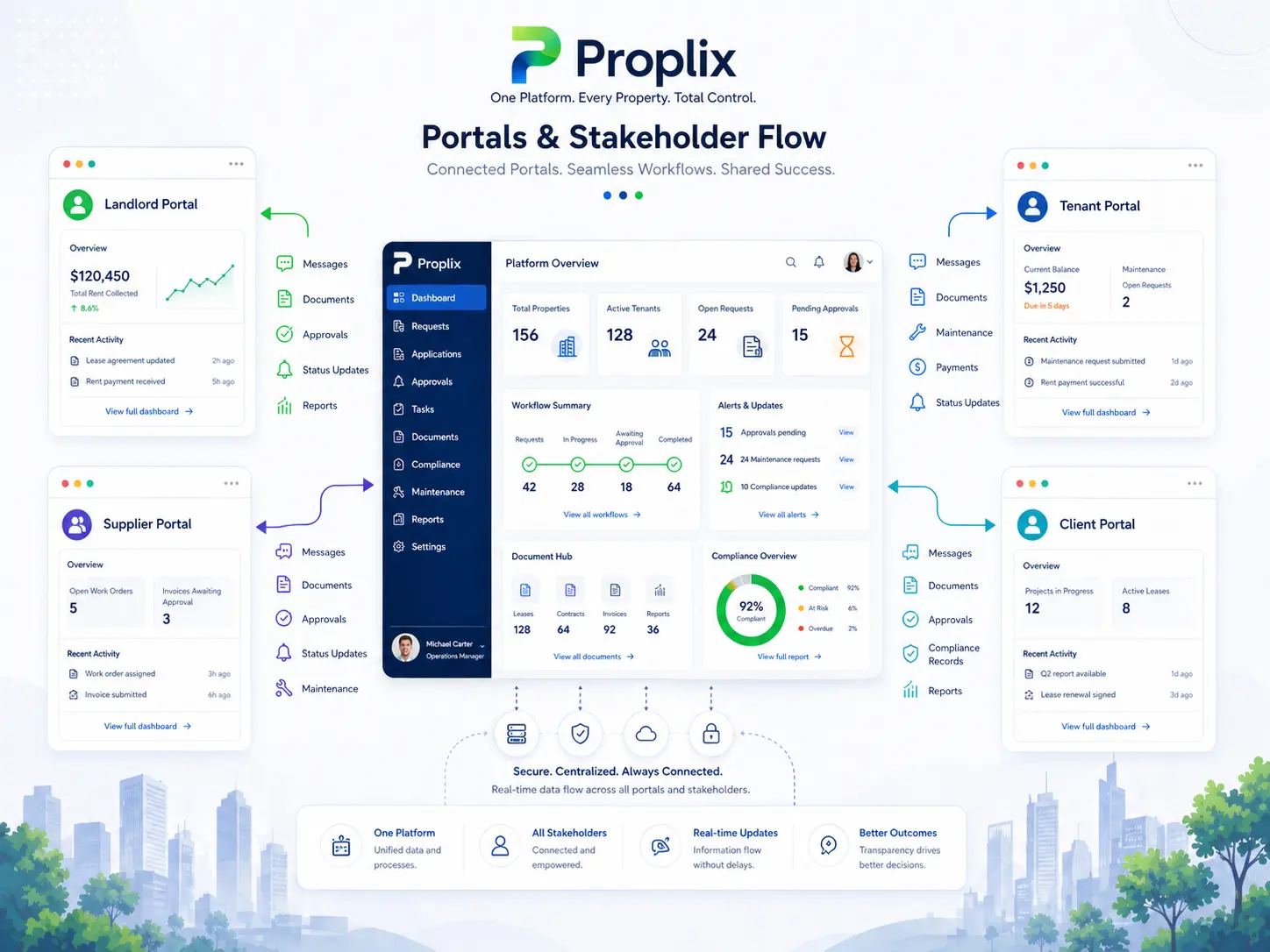
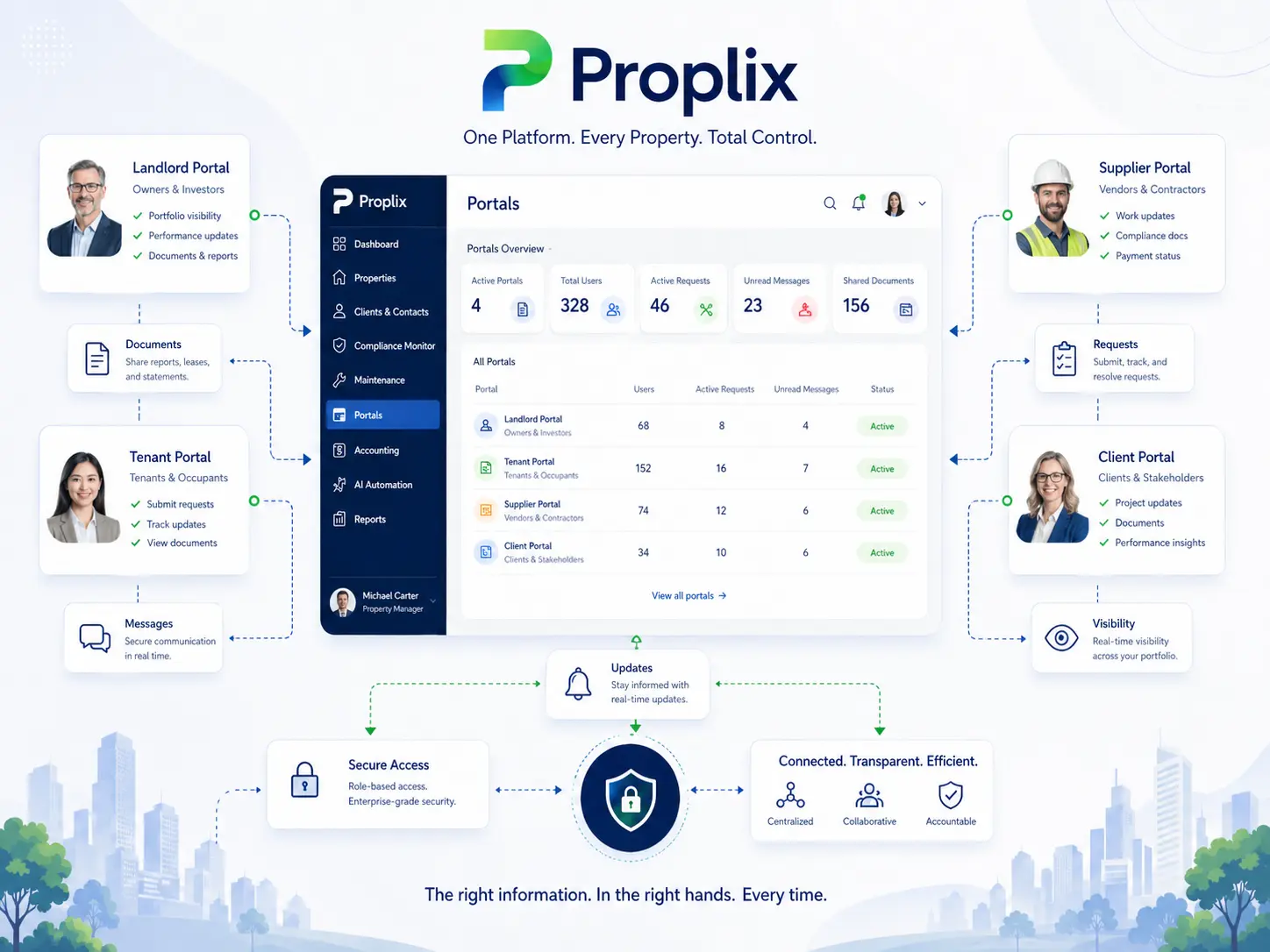
Platform illustration
A visual view of portal-led stakeholder journeys
This illustration supports the portal story by showing how landlord, tenant and supplier experiences should connect to the same live operating environment behind the scenes. That is what makes the digital experience more trustworthy and more useful.
A controlled view for each participant
How Portals fits into dependable property operations
Useful software should make the real operating position easier to understand, including where information is incomplete or a decision is still pending. A portal should not be a second disconnected database. It should present an authorised view of the same property operation so that a request, document, decision or update remains connected with the internal record that staff use.
Give each role enough context to act
Different participants have different reasons for signing in. A tenant may report a repair, a landlord may review portfolio activity, a supplier may update a job and a staff member may need wider operational context. Permissions must follow those responsibilities precisely. For Portals, that means access should follow an evidenced business need and change when responsibility changes.
Keep the reason beside the action
Good portal workflow confirms what was submitted, who now owns it and what the participant should expect next. Internal teams should receive enough context to act without asking the user to repeat information already supplied through the portal. This makes the Portals record more useful during absence, escalation, service review or a later audit.
Design for the case that does not fit
Property work includes incomplete forms, late evidence, changed instructions, unavailable suppliers and circumstances requiring discretion. The system should expose those exceptions, preserve notes and direct them to an authorised person instead of silently forcing a misleading “complete” status.
Configure from representative work
Before launch, test ordinary and awkward journeys with representative users, including missing evidence, incorrect selections, delegated access and closed cases. Clear labels, accessible forms and reliable failure messages matter as much as the visual design. Document what remains outside the system as well, so teams understand the boundary between Proplix, connected services and professional responsibility.
Measure whether the work is improving
Review successful task completion, repeat contact, abandoned journeys, response times and permission-related incidents. A portal is useful when it removes uncertainty while preserving human support for situations that do not fit the standard route. Review findings with the people completing Portals work, because a dashboard may not reveal the manual workaround being used beside it.
Keep guidance, permissions and records current
Ownership, legislation, services and internal policies change. Schedule periodic checks of access, templates, notifications, integrations and retained information. Record material changes and brief affected users so the configured workflow continues to reflect the organisation’s approved way of working.
Proplix supports structured workflow and evidence handling; it does not provide legal advice or remove the need for competent human review. Discuss your organisation, migration or integration requirements through the central secure enquiry route.
Discuss Portals requirements →Plan your next step
Bring a typical case, the systems you use and the main problem you want to solve. Together we can map the records, responsibilities and checks needed for a useful first release.
Explore software integrations, compare enterprise modules or discuss a custom property workflow. The agreed scope will explain what is included, what needs configuration and how your team will be supported.