
Property Management Software
Manage properties, tenancies and day-to-day service operations with more control
Proplix is designed to help property teams centralise property records, tenancy activity, communications, operational tasks and service visibility in one cleaner system.
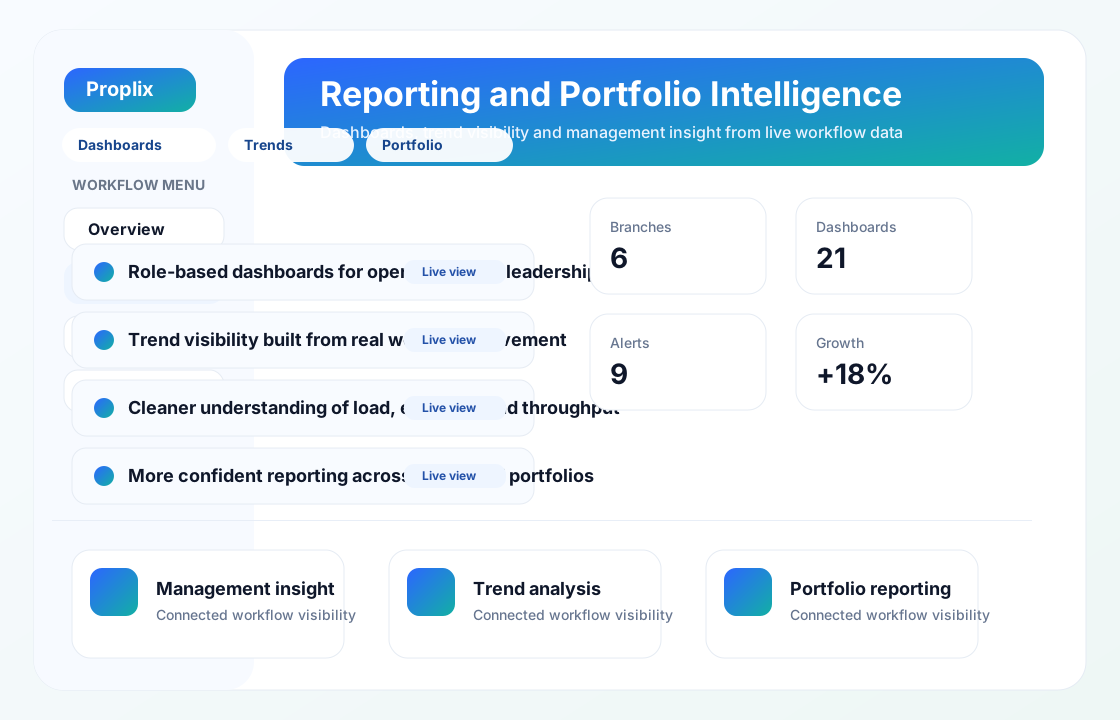
Operations
Property and tenancy visibility
Keep key records, occupancy context, history and internal coordination in one easier place.
Service
Workflow-led delivery
Move from ad hoc task chasing to clearer ownership, updates, statuses and accountability.
Communication
Connected records
Bring operational notes, evidence, documents and relevant service communications into the same picture.
Built for daily use
A stronger working environment for portfolio operations
Property management software should reduce friction, not create more tabs and more reconciliation between disconnected systems. Proplix is designed to bring the working parts of the portfolio together with more clarity.
- Property records, tenancy context and communications in one place.
- Maintenance and compliance connected to the same operational story.
- Space to grow into payouts, arrears, reporting and risk visibility later.
1
Capture the portfolio
Properties, people, statuses and operational context sit together from the start.
2
Run daily service workflows
Tasks, updates, follow-up and supporting records stay visible and easier to manage.
3
Link maintenance and compliance
The key operational pressures can connect back to the same property and tenancy story.
4
Scale the working model
Move into portals, finance direction, BI and future automation without rebuilding the basics.
Property management capability
Property management software features across the Proplix platform
Property management software needs to do far more than hold a property list. It should help the business control properties, tenancies, landlord relationships, tenant service, maintenance, compliance, documents, communication, reporting and day-to-day operations in one connected environment. This added section maps the wider Proplix property management capability so the page reflects the full working value of the platform rather than only a short overview.
For real estate businesses, property management becomes stronger when records, people, workflow, service activity and risk visibility stay connected. That is why the dropdowns below are written around real operational needs: the things property managers, letting agencies and landlords actually need to manage across the portfolio every day.
Property records, unit setup and portfolio structure
A strong property management platform starts with clean property records and a structure that makes the portfolio easier to understand at a glance.
- Property and unit record management
- Portfolio organisation by type or location
- Linked landlord and tenant context
- Property-level document and status visibility
- Cleaner operational reference points
- Reduced scattered record handling
- Better portfolio oversight
- Stronger property-level continuity
Landlord management and portfolio relationships
Property management software should help the business manage landlord relationships properly, with portfolio visibility, communication context and stronger service continuity.
- Landlord profile and relationship management
- Linked property portfolio visibility
- Communication history and account memory
- Service continuity across the team
- Clearer relationship oversight
- Improved landlord confidence
- Reduced fragmented account handling
- Better long-term retention support
Tenant records, tenancy lifecycle and occupancy handling
Tenancies need clearer structure from onboarding through active occupation, renewal, notices and long-term record continuity.
- Tenant profile and occupancy records
- Tenancy-linked property visibility
- Move-in and active-tenancy continuity
- Renewal and notice-aware handling
- Cleaner service history across the lifecycle
- Improved internal coordination
- Reduced tenancy fragmentation
- Better operational memory
Real estate CRM and property-linked relationship workflow
CRM becomes more useful in property management when it is linked directly to properties, landlord activity, tenant context and live operational workflow.
- Lead and relationship management
- Property-linked communication history
- Landlord and applicant pipeline visibility
- Stronger account continuity
- Improved team handover
- Reduced follow-up leakage
- Better commercial control
- One connected relationship view
Maintenance requests, job workflow and contractor allocation
Maintenance is a core part of property management, so it should sit inside the same environment as the property, the tenant, the landlord and the service history.
- Maintenance request intake and job creation
- Priority and status-based progression
- Supplier or contractor allocation
- Job-linked notes, images and updates
- Completion and service record continuity
- Improved stakeholder visibility
- More accountable job management
- Stronger operational control
Supplier management and service delivery coordination
Suppliers and contractors should be managed as part of the wider service workflow rather than through disconnected emails and manual notes.
- Supplier profile and record visibility
- Allocated job continuity
- Update and completion context
- Cleaner outsourced-work tracking
- Improved accountability
- Better internal and external coordination
- Reduced communication gaps
- More professional service workflow
Compliance Monitor and property risk visibility
Property management is stronger when compliance is not treated as a side spreadsheet. Proplix keeps safety, tenancy and governance workflows closer to the wider operating picture.
- Safety and certificate visibility
- Tenancy compliance handling
- Approved-record continuity
- Evidence and review workflow support
- Expiry and renewal awareness
- Cleaner property risk visibility
- Better audit readiness
- Stronger management confidence
Document management and evidence continuity
Property businesses handle a large volume of documents, so the platform needs to make those records easier to find, easier to understand and easier to support with context.
- Property-linked document visibility
- Tenancy and compliance evidence continuity
- Supporting file and image handling
- Cleaner long-term record memory
- Reduced folder sprawl
- Improved operational reference value
- Better review support
- Stronger professional record keeping
Tasks, workflow control and internal accountability
Property operations need stronger internal discipline, which is why tasks, reminders and status-led workflow matter across the whole service model.
- Task assignment and ownership visibility
- Deadline and reminder support
- Status-based workflow control
- Cleaner team handover
- Reduced missed actions
- Better management oversight
- Improved operational rhythm
- More accountable day-to-day execution
Landlord, tenant and supplier portals
Property management becomes more transparent and more scalable when external users can interact with the platform through role-based portals that reflect what matters to them.
- Landlord portal visibility
- Tenant-facing service interaction
- Supplier job workflow relevance
- Cleaner communication pathways
- Better external visibility where appropriate
- Reduced service friction
- Improved brand presentation
- More connected stakeholder experience
Client accounts, compliance finance and payout direction
Property management software becomes more commercially powerful when it supports finance-aware workflow around landlord and supplier payment visibility, reconciliation direction and compliance-linked financial control.
- Landlord and supplier payout direction
- Reconciliation-aware workflow support
- Client-money-sensitive visibility
- Rent receipt allocation direction
- Arrears and payment context
- Improved financial awareness
- Stronger compliance-finance connection
- More mature commercial control
Rent, arrears and tenancy income visibility
Property businesses need a clearer view of rent position, arrears exposure and the operational actions linked to tenancy income and landlord expectations.
- Rent and arrears workflow direction
- Tenancy income context
- Landlord-facing financial visibility support
- Operational action awareness
- Improved manager understanding
- Reduced fragmented rent tracking
- Stronger follow-up control
- Better portfolio-level insight
Property Risk Ledger and portfolio health visibility
A stronger property platform should help the business understand the overall risk picture around each property, not just individual tasks or standalone certificates.
- Single-property risk visibility direction
- Missing-item and expiry awareness
- Tenancy obligation context
- Maintenance-risk linkage
- Notice and service chronology visibility
- Cleaner decision support
- Better management confidence
- More strategic portfolio oversight
Inspections, mobile-first workflow and field operations
Property management benefits from stronger inspection workflow, especially when mobile-first usage supports field teams, evidence capture and cleaner completion records.
- Inspection-led workflow support
- Photo and evidence capture
- Defect and follow-up context
- Field-to-office continuity
- Cleaner sign-off support
- Improved maintenance linkage
- Better operational traceability
- Stronger mobile-first service delivery
Reports, dashboards and portfolio intelligence
Managers need more than a property list. They need visibility across service workload, compliance exposure, branch performance and operational trends that affect the business commercially.
- Portfolio-level visibility
- Compliance and service insight direction
- Performance and operational reporting
- Management dashboard support
- Risk-aware decision context
- Cleaner oversight across departments
- Better strategic understanding
- More informed commercial decisions
Integration Hub, API and connected services
Property management software needs to work with wider business systems, which is why integrations, APIs and connected workflow matter for long-term platform value.
- API and webhook direction
- Accounting and finance integration support
- E-sign, ID and compliance-linked connections
- Inspection and inventory connectivity
- Email and communication workflow extension
- Reduced manual duplication
- Stronger automation potential
- More scalable software architecture
Migration, onboarding and launch support
Property businesses often need help moving away from old systems, spreadsheets or disconnected processes, so migration and onboarding matter as part of the wider software proposition.
- Migration workflow direction
- CSV and data import support
- Document migration awareness
- Faster transition planning
- Cleaner onboarding pathway
- Reduced launch friction
- Improved adoption confidence
- Better move-away-from-legacy readiness
Complaints, ombudsman and authority-ready evidence handling
Property management also needs a stronger structure for complaints, chronology, evidence bundles and formal packs that may be needed for review or authority-facing handling.
- Complaint and chronology support
- Evidence bundle readiness
- Authority-ready documentation direction
- Chain-of-custody awareness
- Cleaner dispute support
- Improved professional defensibility
- Better governance posture
- More complete operational readiness
Training, templates and operational consistency
Property management software becomes more valuable when the organisation can standardise how teams work, onboard users faster and reuse stronger operational templates.
- Training and academy direction
- Operational template support
- Onboarding checklist value
- Improved consistency across the team
- Reduced process variation
- Better user confidence
- Stronger platform adoption
- More reliable day-to-day execution
Why Proplix property management software matters
Property management is strongest when the business can see properties, people, workflow, documents, risk and service activity in one place instead of trying to stitch the operation together manually.
- Brings core property operations into one environment
- Improves service visibility across teams and stakeholders
- Reduces fragmented tools and manual admin
- Supports more confident operational control
- Strengthens landlord and tenant experience
- Connects CRM, compliance, maintenance and portals
- Supports better portfolio decision-making
- Creates a more professional property business platform
Property operations in one place
Property management software should connect the whole operating picture
For many real estate businesses, the real problem is not that they lack tools. It is that those tools do not work together cleanly enough. One system holds contacts, another handles tasks, another stores documents and another tracks compliance or maintenance, which leaves the team working around gaps instead of through one connected operational model. Proplix is stronger when it presents property management as the environment that brings those moving parts together with more structure and clearer daily visibility.
That matters because modern property management is not only about tenancy administration. It is also about landlord relationships, compliance pressure, maintenance control, stakeholder communication, service continuity, portfolio health and commercial oversight. A platform that keeps those areas closer together becomes more useful, more scalable and more professional for the business using it. That is the property management story Proplix presents clearly.
Frequently asked questions
Frequently Asked Questions
Practical answers to common questions from UK letting agents, landlords, property managers and operational teams evaluating this area of Proplix.
What does Features – Property Management Software mean in practice?
Features – Property Management Software supports day-to-day property operations through clearer workflow, connected context and better visibility.
Is this feature relevant for UK letting agents?
Yes. The feature pages are written to help UK letting agencies understand how Proplix can support service delivery, team workflow and more professional operational control.
Will this help reduce manual admin?
That is the intention of the platform story. The feature pages explain how connected records, workflow and communication can reduce repeated admin and improve handover.
How does this connect to the rest of Proplix?
Each feature page is part of a wider one-window platform story, so the value comes not only from the feature itself but from how it links to other areas such as compliance, portals and operational visibility.
Is this page only about software features?
No. A stronger feature page should also explain why the capability matters operationally and commercially, not just what the software component is called.
Can this support portfolio growth?
Yes. The feature pages are positioned to show how Proplix can scale from day-to-day workflow support into a more mature operating model as the business grows.
How does this help in everyday property operations?
Because serious buyers want more than short marketing lines. It helps explain practical value, shows how the workflow supports day-to-day operations and makes it easier to judge whether Proplix is the right fit.
Will this feature help internal teams as well as clients?
Yes. The feature pages are written to show how internal teams benefit through better control and how external stakeholders benefit through clearer service and communication.
How should I read this page alongside commercial proposal?
Use the feature page to understand capability and workflow fit, then use commercial proposal to understand which level of platform depth may suit your organisation.
What should I look at next after this page?
The next step usually depends on your role. Most visitors continue into commercial proposal, a related solution route, a portal page or the contact path for a more direct discussion.
Platform illustration
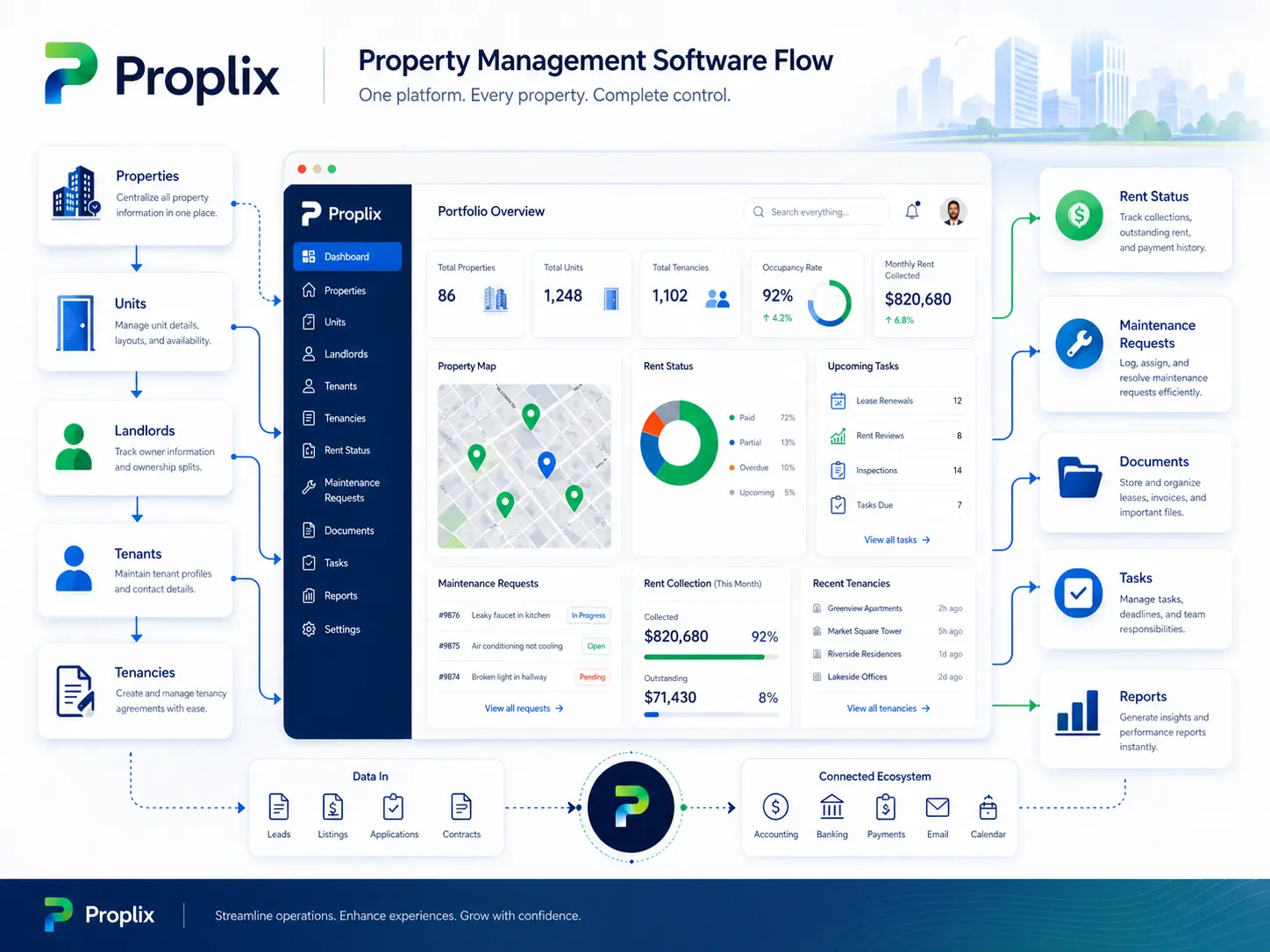
A visual view of connected property management
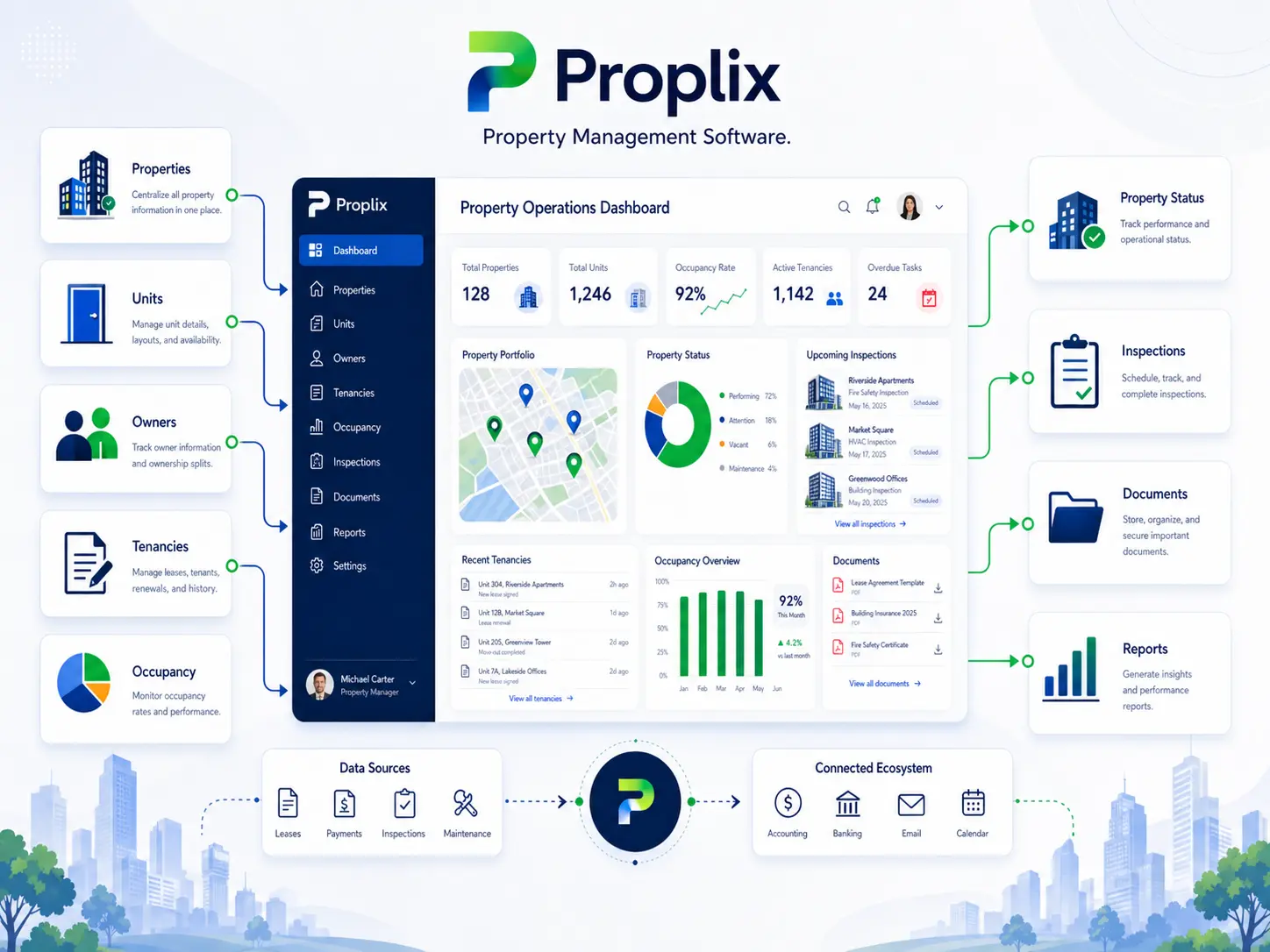
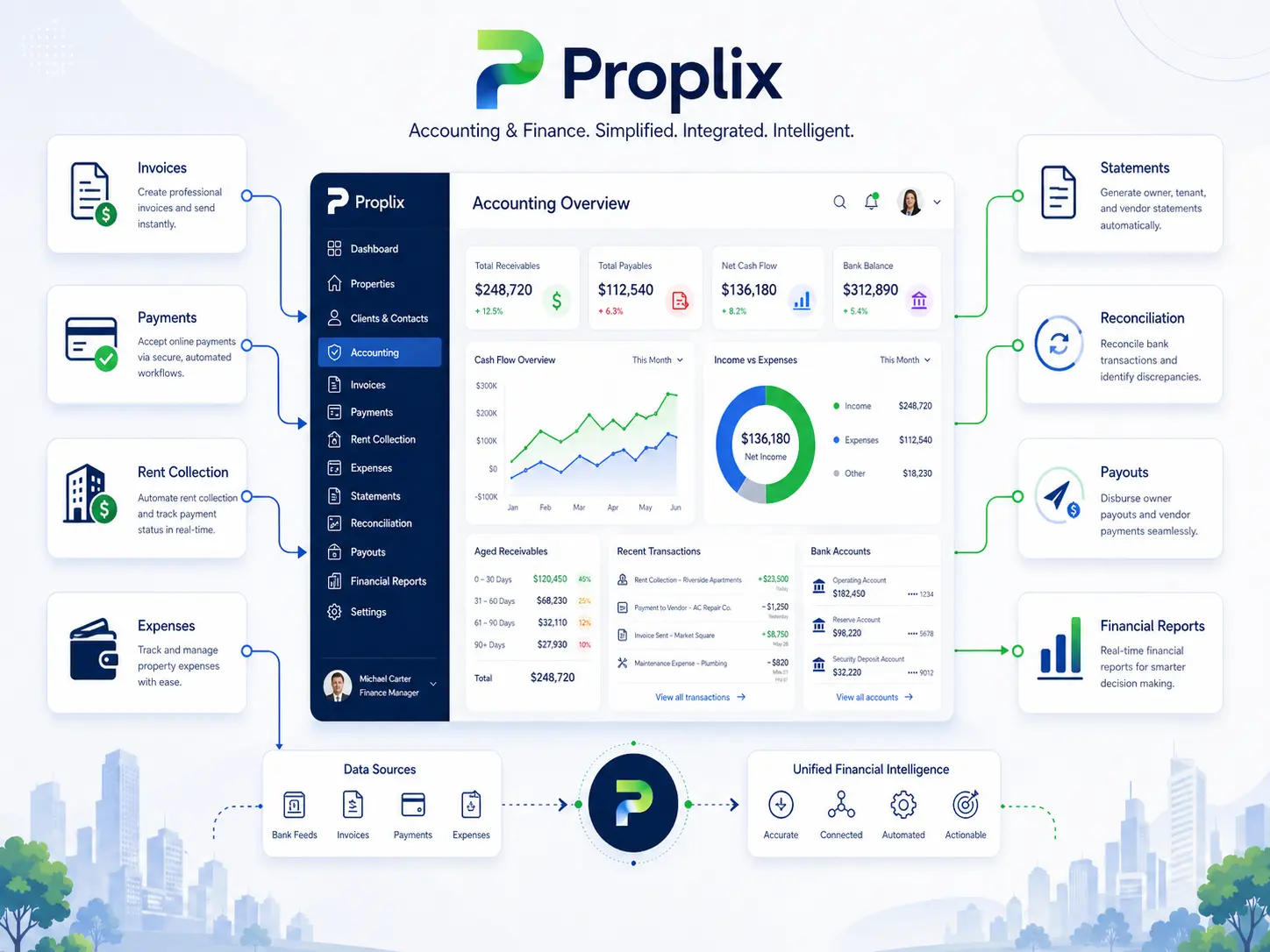
This illustration shows how property management becomes stronger when records, operational tasks, reporting and stakeholder visibility are managed inside one platform instead of being split across separate tools.
Working with the capability
How Property Management Software fits into dependable property operations
The strongest starting point is the work people actually complete, including the exceptions that rarely appear in a process diagram. This capability belongs inside the daily operating record, where property context, relationships, tasks, documents and decisions can be followed together instead of being reconstructed from separate systems.
Give each role enough context to act
Operational staff need a clear next action; managers need ownership and exceptions; clients and external participants need only the information their role permits. The practical value comes from serving those views without creating parallel versions of the truth. For Property Management Software, that means access should follow an evidenced business need and change when responsibility changes.
Keep the reason beside the action
A useful workflow records who received the work, what they checked, what remains outstanding and why a decision was made. That creates a handover another authorised colleague can understand without relying on private inbox history. This makes the Property Management Software record more useful during absence, escalation, service review or a later audit.
Design for the case that does not fit
Property work includes incomplete forms, late evidence, changed instructions, unavailable suppliers and circumstances requiring discretion. The system should expose those exceptions, preserve notes and direct them to an authorised person instead of silently forcing a misleading “complete” status.
Configure from representative work
Implementation should begin with real examples from the organisation: a recent case that went well, one that stalled and one that exposed missing information. Those examples reveal the fields, permissions, notifications and escalation points the configured workflow actually needs. Document what remains outside the system as well, so teams understand the boundary between Proplix, connected services and professional responsibility.
Measure whether the work is improving
A sensible review looks at completion time, avoidable follow-up, unresolved exceptions, record quality and the amount of manual reconciliation still required. The aim is dependable work and clearer service, not automation for its own sake. Review findings with the people completing Property Management Software work, because a dashboard may not reveal the manual workaround being used beside it.
Keep guidance, permissions and records current
Ownership, legislation, services and internal policies change. Schedule periodic checks of access, templates, notifications, integrations and retained information. Record material changes and brief affected users so the configured workflow continues to reflect the organisation’s approved way of working.
Proplix supports structured workflow and evidence handling; it does not provide legal advice or remove the need for competent human review. Discuss your organisation, migration or integration requirements through the central secure enquiry route.
Discuss Property Management Software requirements →What a well-run Property Management Software process should make clearer
A member of staff opening the record should be able to understand its purpose, current status, owner and next meaningful action without first asking several colleagues for background. That does not mean every case follows an identical path. It means the agreed route is visible, departures are explained and supporting material remains beside the decision it informed. For Property Management Software work, clarity is especially important when the case moves between teams or returns after a period of inactivity.
The day-to-day experience should also make uncertainty honest. Missing evidence, a disputed instruction or a review awaiting specialist input should be shown as an exception, not hidden behind a reassuring colour or forced completion state. Managers can then direct attention where it is useful, while staff retain a record of the checks already completed. This approach supports a more natural conversation with landlords, tenants, suppliers, clients and colleagues because updates come from a current operational record rather than a hurried reconstruction.
Good information design reduces unnecessary detail without removing useful context. Labels should use the language the organisation actually understands; permissions should reflect real responsibilities; and notifications should be reserved for events that require awareness or action. When every minor system event generates an alert, important work becomes harder to see. A considered Property Management Software configuration therefore balances automation with judgement and gives authorised users a practical way to explain, reassign or escalate unusual work.
Implementation is not finished when data has been imported or users have received a login. Teams need time to test live examples, compare the configured route with policy, correct weak source information and agree how questions will be handled after launch. Early reviews should look for duplicated entry, private spreadsheets, unclear ownership and steps that users routinely bypass. Those observations are useful evidence: they show where the design, training or operating decision still needs attention rather than placing all responsibility on the person using the system.
Over time, the organisation should be able to show whether Property Management Software work is becoming easier to complete and easier to explain. Useful evidence may include fewer avoidable chasers, faster retrieval, more complete handovers, better-quality submissions and a smaller backlog of unresolved exceptions. Measures should be read alongside real cases and user feedback. Proplix provides the connected workspace for that improvement, while accountable people remain responsible for policy, professional decisions and the service ultimately delivered.