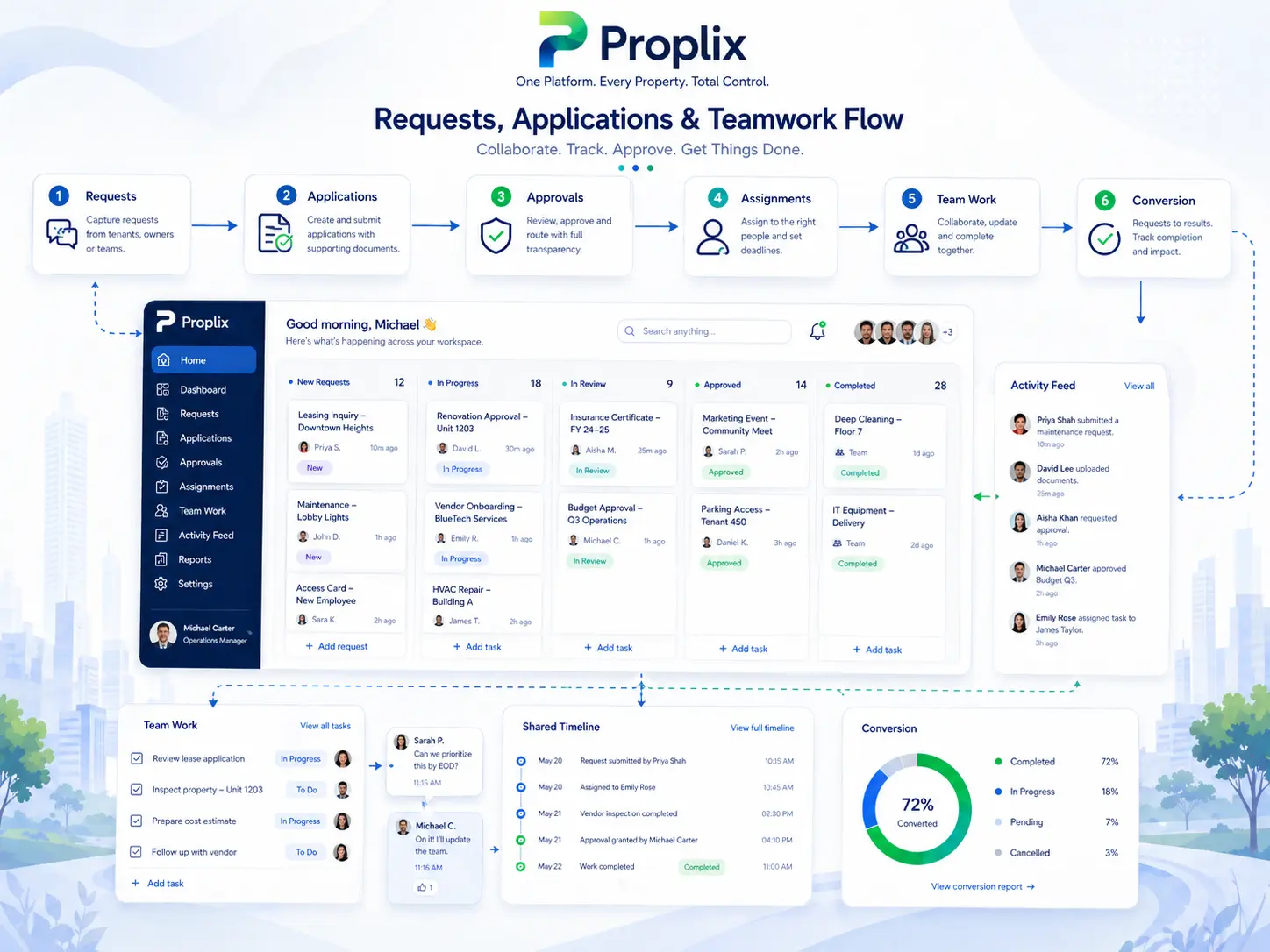
How Proplix works as a professional CRM for team work
A professional CRM should not only store names, phone numbers and email addresses. For a modern UK property business, the CRM needs to help the team understand relationships, open work, service history, property context, compliance pressure, documents, communication and future actions. Proplix is shaped around that wider reality. It helps users move from a simple customer record into a live operating record where people, properties, tenancies, suppliers, tasks, files and actions can be connected.
This is especially valuable for letting agents, property managers, landlords, social housing teams and real estate operations because most daily work is cross-functional. A tenant message may become a maintenance job. A maintenance job may affect landlord communication. A landlord request may need a compliance check. A compliance issue may require a notice, email, document, PDF, internal task and management review. If each part lives in a different system, the team loses time and context. Proplix helps bring those moving parts into a cleaner one-window workflow.
Team Work in Proplix is therefore not just about assigning tasks. It is about helping the whole business operate from a shared source of truth. Sales teams can manage leads and follow-ups. Admin teams can manage clients and documents. Property managers can review properties, tenancies and supplier activity. Compliance users can track certificates, reminders, evidence and records. Finance users can understand invoices, estimates, contracts and payment context. Managers can see workload, accountability and progress without manually asking every department for updates.
The human benefit is simple: people can work with less confusion. Staff do not need to keep asking who owns the next step, where the file is, whether the landlord has been updated, whether the tenant has submitted evidence, whether the supplier has completed the job, or whether the compliance record is current. Proplix aims to make those answers easier to find because the CRM is connected to the wider platform instead of standing alone.
For business owners, this creates a stronger operational model. A joined-up CRM improves response speed, accountability, staff training, customer service, reporting and audit readiness. It also supports growth because new staff can understand the system faster, managers can spot bottlenecks earlier and customers receive a more consistent service experience.