
General Client category
Files, Statements & Vault in the Proplix General Client flow
A strong general client workflow is not only about names and contacts. It is also about keeping the account connected to the documents and record outputs that the business uses every day. In the verified Proplix help structure, that includes client files, attachments, statements and vault entries.
This matters because customer relationships become difficult to manage when important files sit in inboxes, local downloads or shared drives with weak context. A better working model keeps those materials close to the right record, so the team can understand what belongs to whom and why it matters.
Verified current build
What this category actually covers
The verified Proplix help flow shows that client records can sit alongside files, attachments, statements and vault-style document visibility rather than leaving those items scattered elsewhere.
This category explains the record side of the General Client account. It is how Proplix turns a customer profile into a more complete and usable operational record.
Exact feature areas in this part of Proplix
This list is written as a practical explanation layer for the public website and is grounded in the verified current Proplix build and help audit.
- Client-linked files and attachments held closer to the account record.
- Statement visibility around the customer relationship.
- Vault-style record handling within the wider Proplix environment.
- Cleaner document access for staff working inside the same account context.
- A more reliable history around what was stored, shared or referenced for the client.
How this workflow behaves in practice
Rather than treating the client account as a static record, Proplix uses it as part of a connected workflow where information, actions and history remain much easier to follow.
01
Link documents to the client
Files and attachments can be kept near the General Client account so staff do not lose context.
02
Preserve statement visibility
Where statement-style outputs matter, they remain part of the client story rather than becoming isolated exports.
03
Keep secure record handling cleaner
Vault-style storage and controlled file access become more useful when they remain tied to the right account.
04
Reduce document sprawl
The wider benefit is operational clarity: fewer disconnected files and a stronger record of what belongs to the client.
Linked verified guidance
These help pages are already part of the verified Proplix help centre and support the same feature flow explained on this public page.
A controlled view for each participant
How Files Statements And Vault fits into dependable property operations
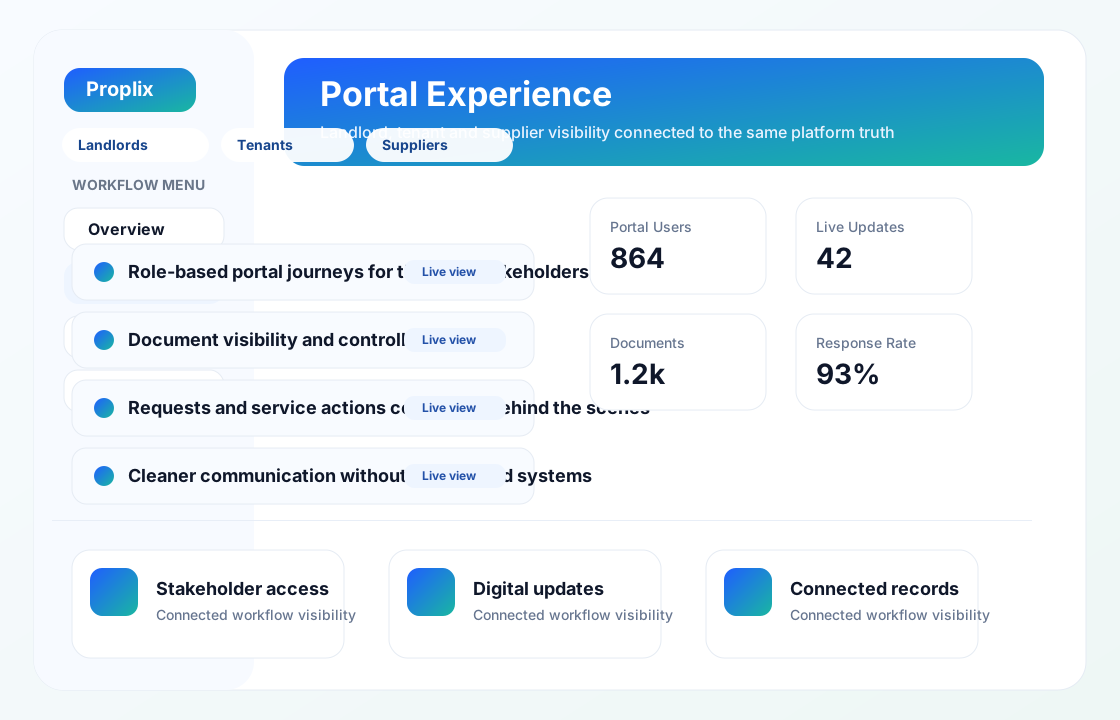
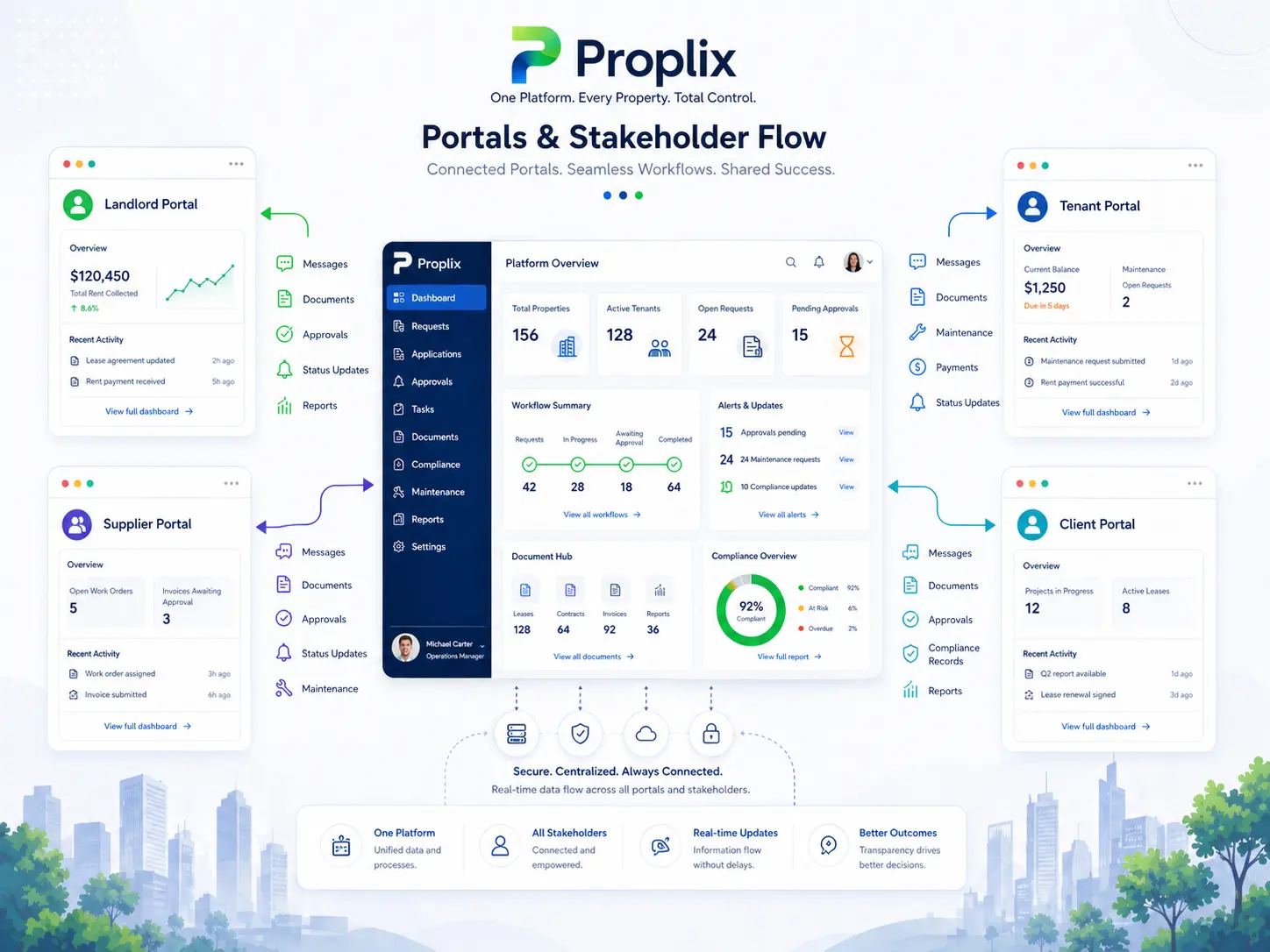
A credible workflow connects everyday actions with the records and responsibility needed to explain the outcome later. A portal should not be a second disconnected database. It should present an authorised view of the same property operation so that a request, document, decision or update remains connected with the internal record that staff use.
Give each role enough context to act
Different participants have different reasons for signing in. A tenant may report a repair, a landlord may review portfolio activity, a supplier may update a job and a staff member may need wider operational context. Permissions must follow those responsibilities precisely. For Files Statements And Vault, that means access should follow an evidenced business need and change when responsibility changes.
Keep the reason beside the action
Good portal workflow confirms what was submitted, who now owns it and what the participant should expect next. Internal teams should receive enough context to act without asking the user to repeat information already supplied through the portal. This makes the Files Statements And Vault record more useful during absence, escalation, service review or a later audit.
Design for the case that does not fit
Property work includes incomplete forms, late evidence, changed instructions, unavailable suppliers and circumstances requiring discretion. The system should expose those exceptions, preserve notes and direct them to an authorised person instead of silently forcing a misleading “complete” status.
Configure from representative work
Before launch, test ordinary and awkward journeys with representative users, including missing evidence, incorrect selections, delegated access and closed cases. Clear labels, accessible forms and reliable failure messages matter as much as the visual design. Document what remains outside the system as well, so teams understand the boundary between Proplix, connected services and professional responsibility.
Measure whether the work is improving
Review successful task completion, repeat contact, abandoned journeys, response times and permission-related incidents. A portal is useful when it removes uncertainty while preserving human support for situations that do not fit the standard route. Review findings with the people completing Files Statements And Vault work, because a dashboard may not reveal the manual workaround being used beside it.
Keep guidance, permissions and records current
Ownership, legislation, services and internal policies change. Schedule periodic checks of access, templates, notifications, integrations and retained information. Record material changes and brief affected users so the configured workflow continues to reflect the organisation’s approved way of working.
Proplix supports structured workflow and evidence handling; it does not provide legal advice or remove the need for competent human review. Discuss your organisation, migration or integration requirements through the central secure enquiry route.
Discuss Files Statements And Vault requirements →Plan your next step
Bring a typical case, the systems you use and the main problem you want to solve. Together we can map the records, responsibilities and checks needed for a useful first release.
Explore software integrations, compare enterprise modules or discuss a custom property workflow. The agreed scope will explain what is included, what needs configuration and how your team will be supported.